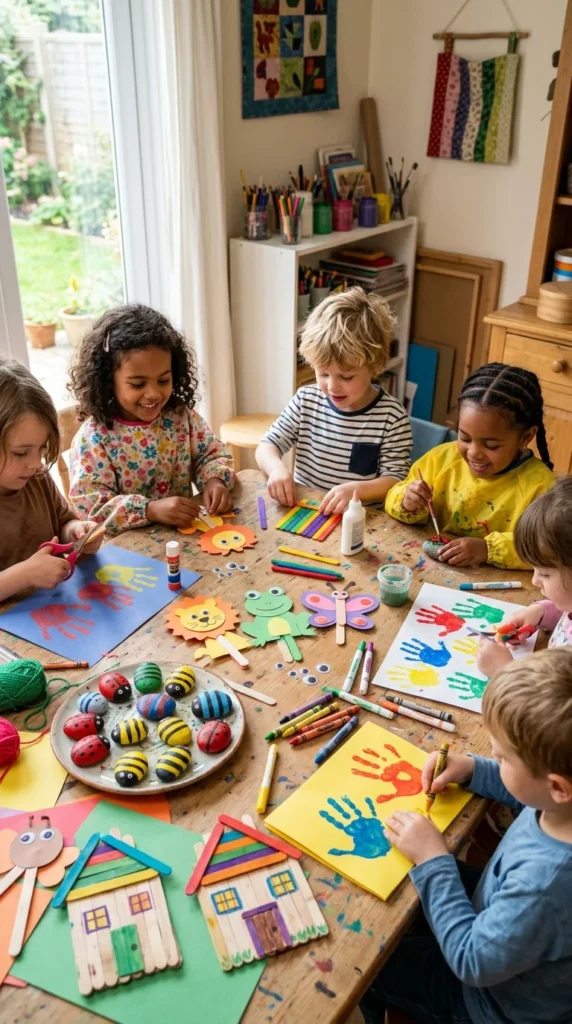
Craft time gives kids a simple way to learn, play, and use their imagination. Small projects help children practice focus, hand movement, and problem-solving without feeling like schoolwork. Many beginner crafts use items already sitting at home, which makes them easy on the budget too. From paper art to painted rocks, these projects keep kids busy while creating something fun they can proudly show off. Parents, grandparents, and teachers can also join the fun without spending hours preparing supplies. These beginner-friendly ideas work well for rainy afternoons, classroom activities, weekend fun, or quiet time at home.
1. Paper Plate Animal Faces
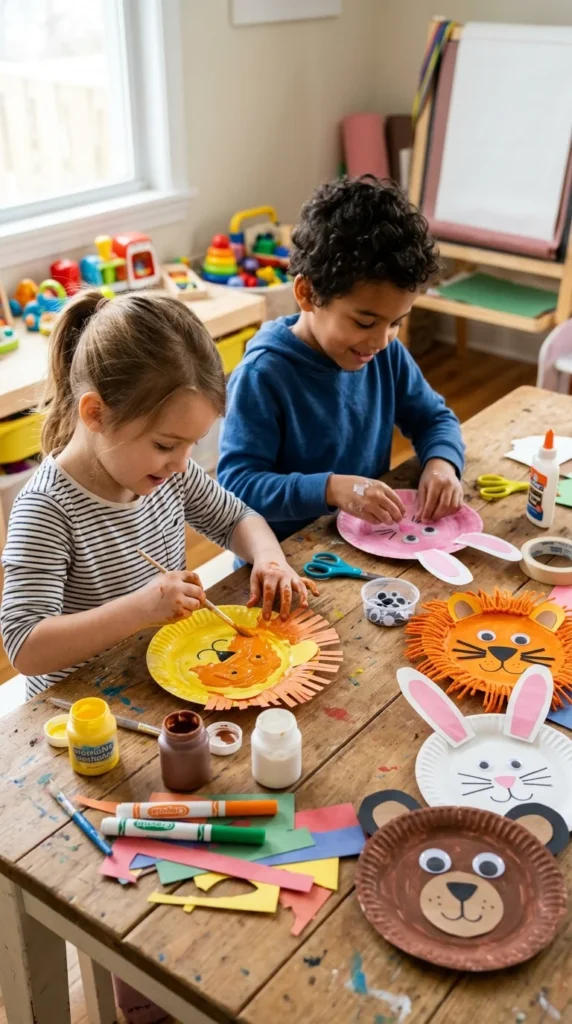
Paper plate animal crafts are easy for young kids because the shapes are already made. Children can turn plain plates into lions, bears, frogs, or rabbits using paint and colored paper. This project works well for preschoolers and beginners because it uses simple steps.
Start by painting the plate. Let it dry for a few minutes. Kids can glue on ears, whiskers, or paper noses afterward. Googly eyes add extra fun without much effort.
This activity keeps costs low because paper plates are cheap. Leftover wrapping paper or old magazines can replace craft paper too. Parents can even cut shapes ahead of time for younger children.
Kids also enjoy pretending with the finished animals later. The crafts become toys after the activity ends. That makes the project feel more exciting and useful.
For extra fun, match the craft with animal stories or songs. A bunny craft can pair with spring books, while a lion face fits jungle themes. Small changes create many different projects from the same supplies.
2. Handprint Rainbow Art
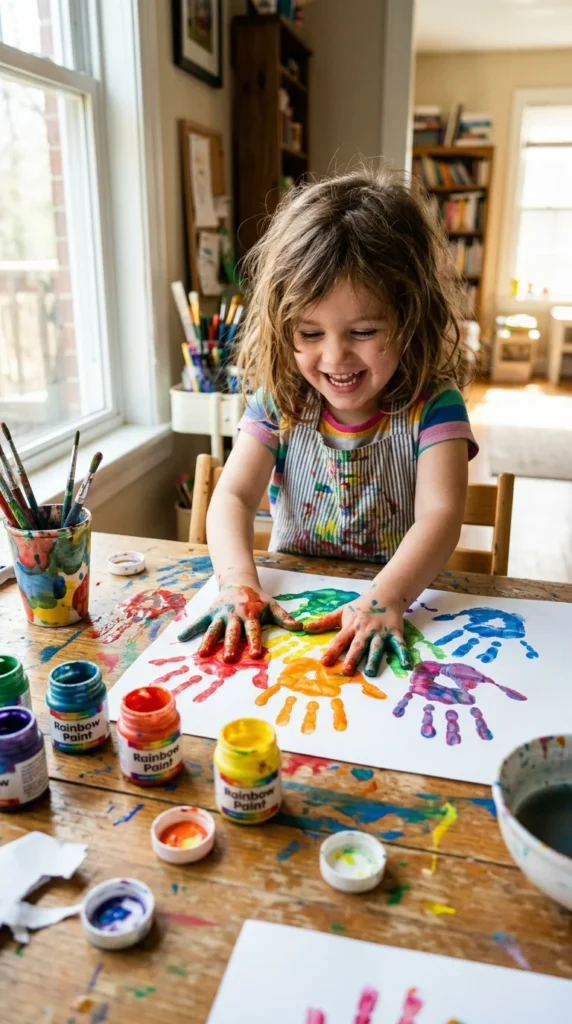
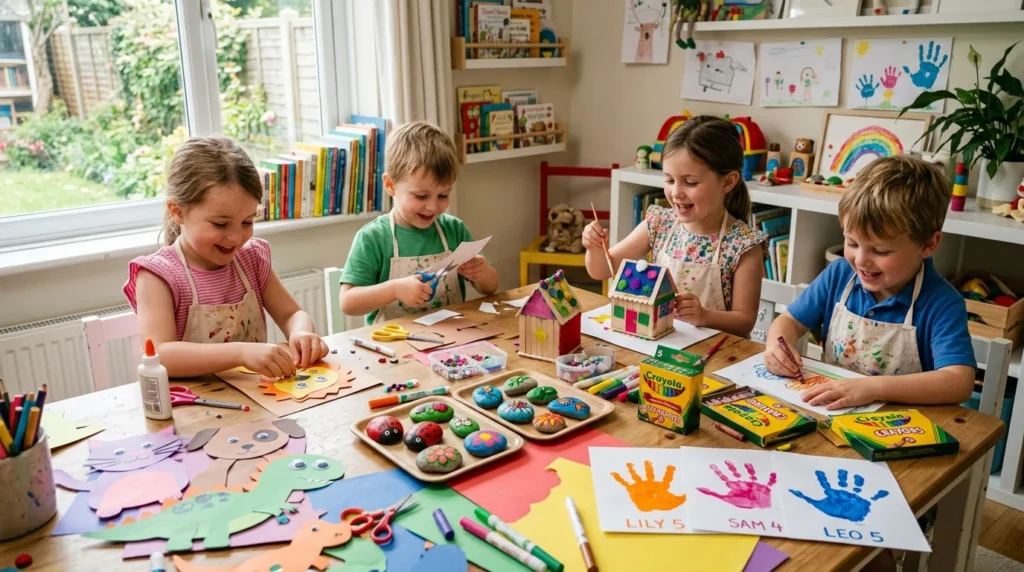
Handprint rainbow art gives kids a colorful way to create keepsakes. Young children enjoy seeing their own hands become part of the artwork. The steps stay simple, which makes this project perfect for beginners.
Washable paint works best for easy cleanup. Kids dip their hands into paint and press them onto paper in rainbow colors. Red, orange, yellow, green, blue, and purple prints create a bright pattern.
Large paper gives children more room to experiment. Some kids like lining up prints in arches. Others prefer random designs across the page. Every piece turns out different, which makes the activity feel personal.
Budget-friendly supplies keep this craft easy for families. Printer paper, cardboard, or leftover paper bags can replace expensive art pads. Washable paint also lasts through many projects.
Parents often save these crafts as memory pieces. Teachers can hang them on classroom walls too. The colorful prints instantly brighten a room.
For younger children, adults can help with paint placement. Older kids may enjoy adding clouds, suns, or glitter afterward. Small details turn a simple activity into something special.
3. Popsicle Stick Picture Frames
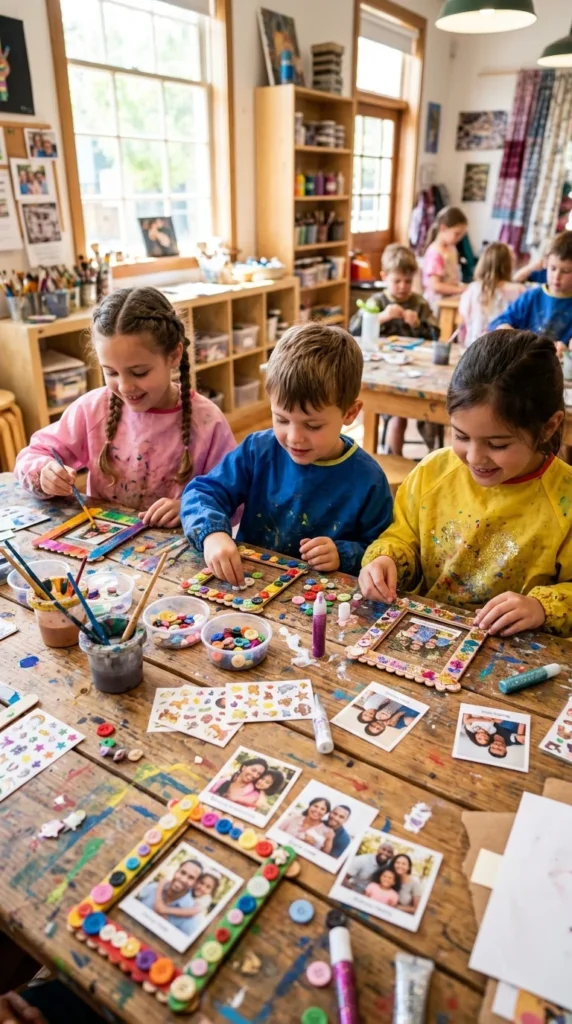
Popsicle stick picture frames are simple enough for beginners but still exciting to decorate. Kids enjoy building something they can actually use afterward. The finished frame also makes a thoughtful homemade gift.
Start by gluing four sticks into a square shape. Once dry, children can paint the frame in bright colors. Stickers, buttons, beads, or sequins add extra decoration without much work.
Small printed photos fit perfectly inside these frames. Kids love displaying family pictures, pet photos, or drawings they made themselves. Magnets can even be added to the back for refrigerator displays.
This craft stays affordable because popsicle sticks come in large packs. Families can also reuse decorations from old craft kits or holiday leftovers.
Younger children may need help with glue placement. Older kids can create layered designs or patterns on their own. Simple changes keep the activity interesting for different ages.
The project also helps children practice patience while waiting for glue to dry. That small step teaches them to slow down and focus during creative activities.
4. Painted Rock Creatures
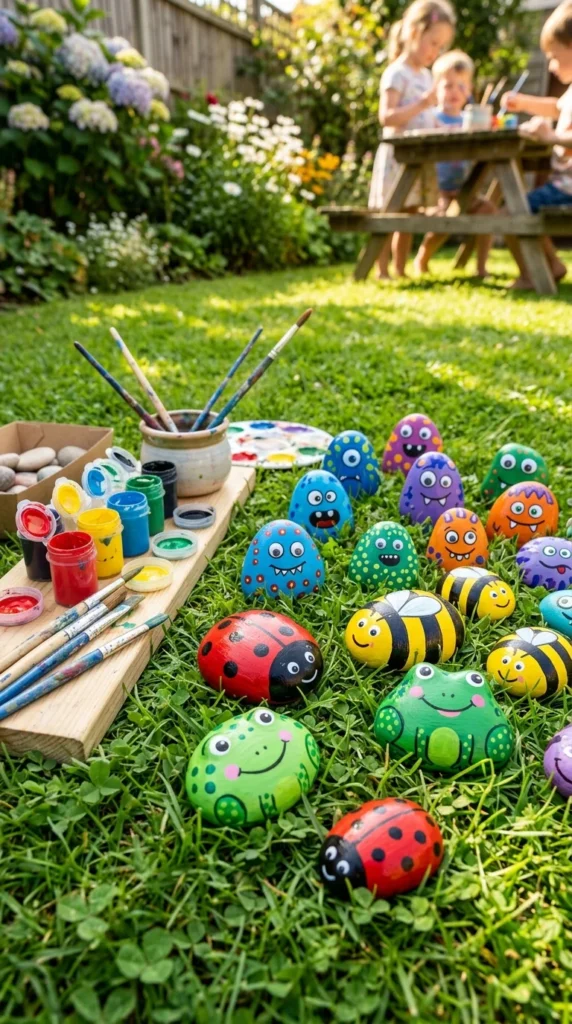
Painted rock creatures turn ordinary stones into tiny pieces of art. Kids enjoy searching for rocks outside before starting the craft. That outdoor step adds extra fun before the painting even begins.
Smooth rocks work best because they are easier to paint. Children can create bugs, monsters, fish, or funny faces using simple paint colors. Thick paint pens also work well for details.
This activity costs very little since the rocks come from nature. Acrylic paint lasts a long time too, which helps stretch the budget for multiple projects.
Painted rocks can decorate gardens, desks, or bookshelves afterward. Some families even hide them outside for neighborhood rock hunts. Kids love the idea of someone else discovering their artwork.
Beginners can start with simple dots, stripes, or smiley faces. Older children may try layered designs with tiny details. Both age groups usually stay entertained for a long time.
Clear sealer spray helps protect outdoor rocks from rain. Parents can handle that step separately. The result becomes a colorful decoration kids feel proud to display.
5. Toilet Paper Roll Binoculars
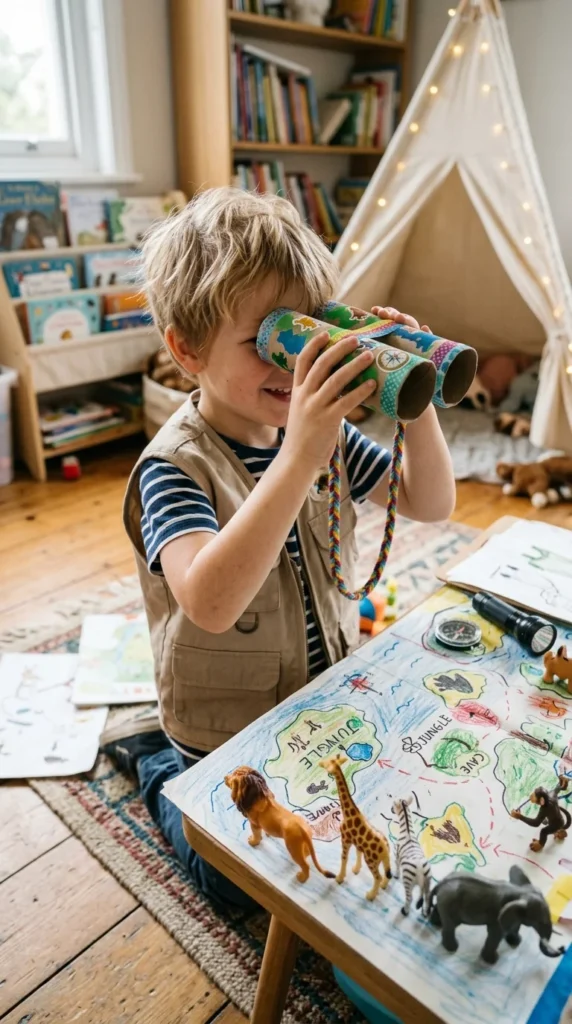
Toilet paper roll binoculars turn recycled materials into imaginative toys. Kids enjoy crafting something they can immediately play with afterward. The steps stay simple enough for beginners.
Two empty cardboard rolls are taped or glued together side by side. Children can paint them, wrap them in paper, or decorate them with stickers. Yarn attached to the sides creates a neck strap.
After decorating, the real fun begins. Kids pretend they are explorers, pirates, bird watchers, or jungle adventurers. Simple crafts often create the biggest imaginative games.
This activity works well for families wanting low-cost projects. Most supplies already sit around the house. Scrap paper and leftover ribbon also work perfectly for decoration.
Teachers can connect the craft to lessons about animals or travel. Parents may use it during pretend camping days indoors.
Younger children practice cutting and gluing during the project. Older kids may add details like buttons or camouflage paint. Every version turns out unique and playful.
6. Fingerpaint Flower Garden
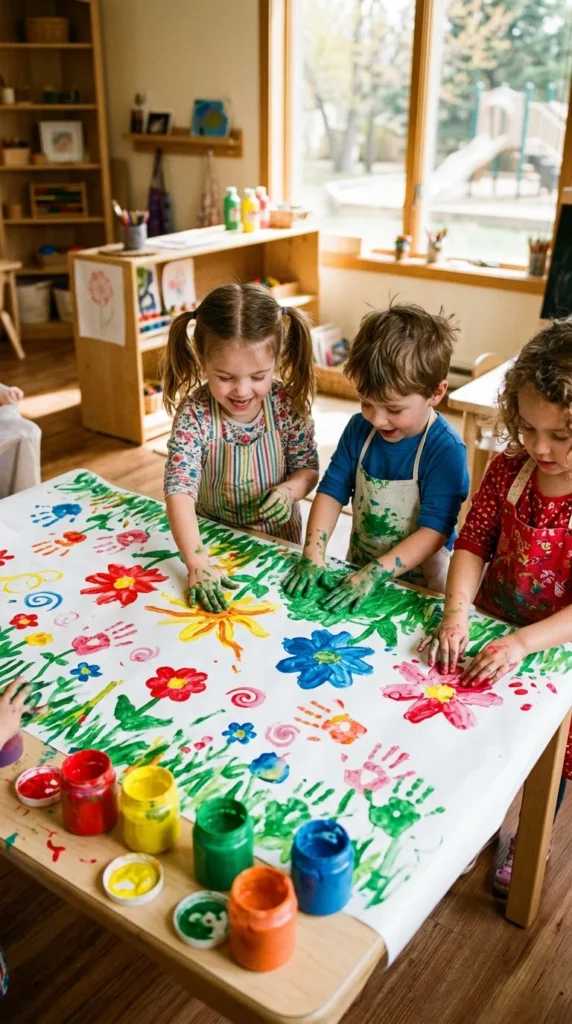
Fingerpaint flower gardens allow children to create colorful art without worrying about perfection. Young beginners especially enjoy using their hands instead of brushes. The activity feels playful and relaxed.
Kids can press fingerprints into circles to form flower petals. Green finger streaks become stems and grass. Simple dots create butterflies or bees nearby.
Washable paint makes cleanup easier for parents and teachers. Large sheets of paper also help children move freely without feeling cramped.
Budget-friendly materials keep this project simple. Even recycled cardboard can replace art paper if needed. Small paint bottles stretch across many sessions too.
This craft helps children practice color recognition and hand movement. The freedom of fingerpainting also builds confidence because there are no strict rules.
Finished artwork looks cheerful hanging on refrigerators or walls. Families often save them as memory pieces from younger childhood years.
Older kids may add details with markers once the paint dries. Younger children usually enjoy the simple painting process most of all.
7. Coffee Filter Butterflies
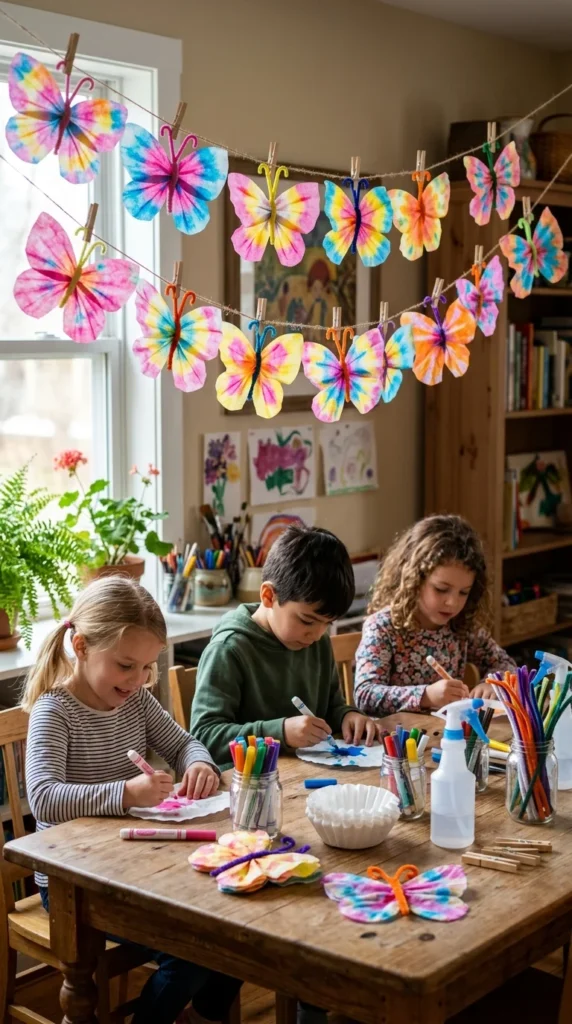
Coffee filter butterflies combine art and science in a simple project kids enjoy. The soft blended colors create beautiful results with very little effort.
Children start by coloring coffee filters using washable markers. A light spray of water blends the colors together into watercolor-style patterns. Once dry, the filter folds into butterfly wings.
Pipe cleaners wrapped around the center create the butterfly body and antennae. Kids love seeing the plain filter transform into something colorful and delicate.
This activity stays affordable because coffee filters cost very little. Families usually already own markers and spray bottles too.
Finished butterflies look pretty hanging near windows or attached to bedroom walls. Teachers can also string many butterflies together for classroom displays.
The craft helps beginners practice folding and fine motor skills. At the same time, the color blending keeps children curious and entertained.
Different color combinations create endless butterfly styles. No two projects ever look exactly alike, which keeps the activity exciting each time.
8. Paper Bag Puppets
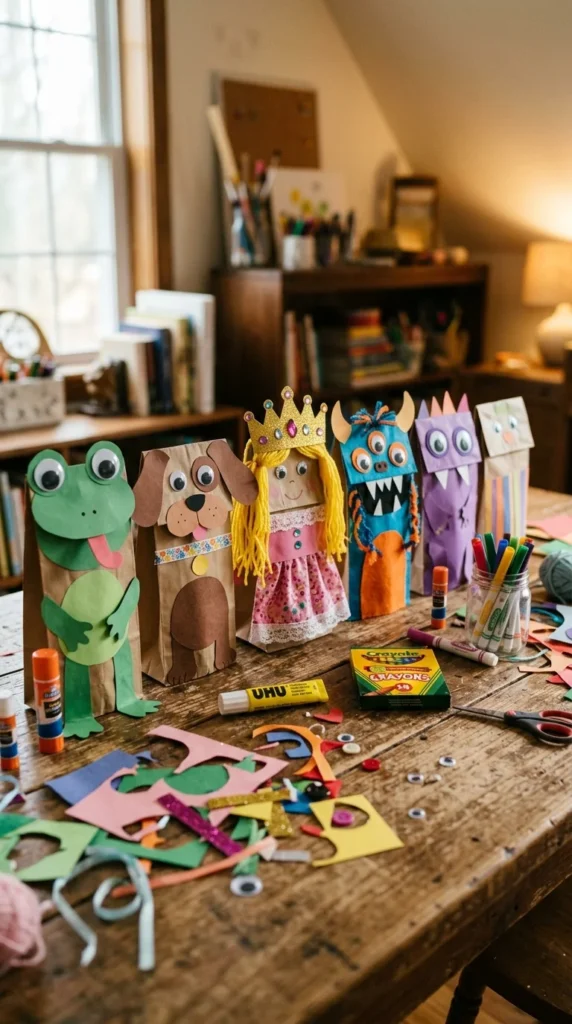
Paper bag puppets give kids a fun mix of crafting and storytelling. The project starts simple and becomes even more exciting during pretend play afterward.
Children can decorate plain paper bags with markers, paper shapes, yarn hair, and googly eyes. Animals, monsters, or cartoon faces all work well for beginners.
Once finished, kids naturally begin creating puppet shows. They invent voices, stories, and silly conversations. That extra imaginative play keeps the activity going longer.
Paper lunch bags stay inexpensive, which makes this project easy for groups or classrooms. Leftover craft scraps also work perfectly for decorations.
Younger children may need help cutting shapes. Older kids can create moving puppet mouths or detailed outfits. Small adjustments fit different skill levels easily.
Parents can turn puppet time into family storytelling nights. Teachers often connect puppet crafts with reading activities too.
The finished puppets become reusable toys instead of decorations sitting unused. That makes kids feel even more excited about creating them.
9. Egg Carton Caterpillars
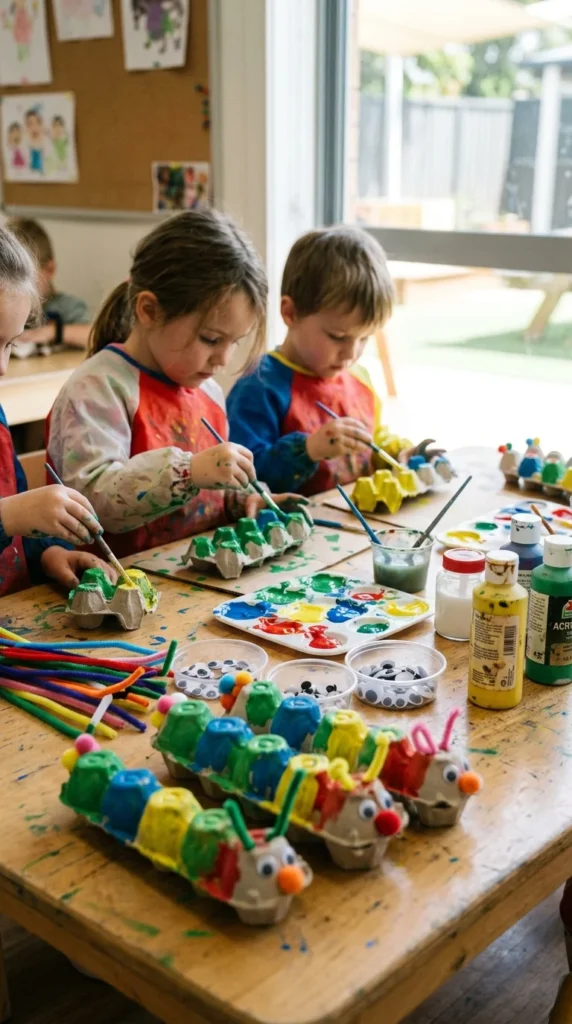
Egg carton caterpillars turn recycled packaging into cute little creatures. Kids enjoy cutting, painting, and decorating the sections into funny bugs.
Adults can cut the egg carton strips first for younger children. Kids then paint the caterpillar bodies in bright colors. Pipe cleaners make flexible antennae, while googly eyes create silly expressions.
This project works well for spring themes or bug lessons. Children often enjoy learning about caterpillars and butterflies while crafting.
Using recycled materials helps keep the activity inexpensive. Families can save egg cartons instead of throwing them away. Paint and glue are usually the only extra supplies needed.
The craft also helps children practice patience while waiting for paint to dry. That short break gives them time to plan decorations too.
Older children may add legs, wings, or patterns. Younger kids usually enjoy simply painting and attaching eyes. Both approaches create adorable results.
Finished caterpillars can decorate shelves, windowsills, or classroom tables afterward. Kids love showing off their funny bug creations.
10. Sponge Painted Shapes
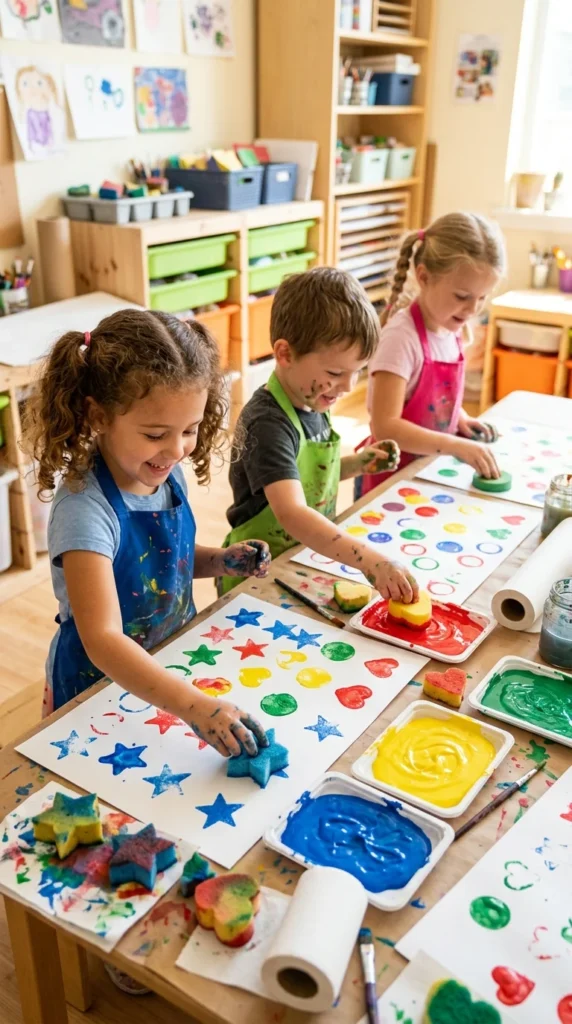
Sponge painting gives children an easy way to create colorful art without complicated steps. Beginners especially enjoy stamping shapes onto paper and seeing quick results.
Parents can cut kitchen sponges into stars, circles, hearts, or squares. Kids dip the shapes into paint and press them onto paper repeatedly.
This project works well for learning colors and patterns. Children may create repeating designs, rainbow pages, or random stamp art. Every version looks playful and creative.
Washable paint helps keep cleanup simple afterward. Newspaper or cardboard under the paper protects tables during the activity.
Sponge painting stays budget-friendly because old sponges work perfectly. Families rarely need special supplies for this project.
Younger children practice hand control while stamping. Older kids may layer shapes together for more detailed artwork.
Finished pages can become homemade wrapping paper, greeting cards, or bedroom decorations. Kids enjoy seeing their simple art used in real ways around the house.
11. Yarn Wrapped Cardboard Hearts
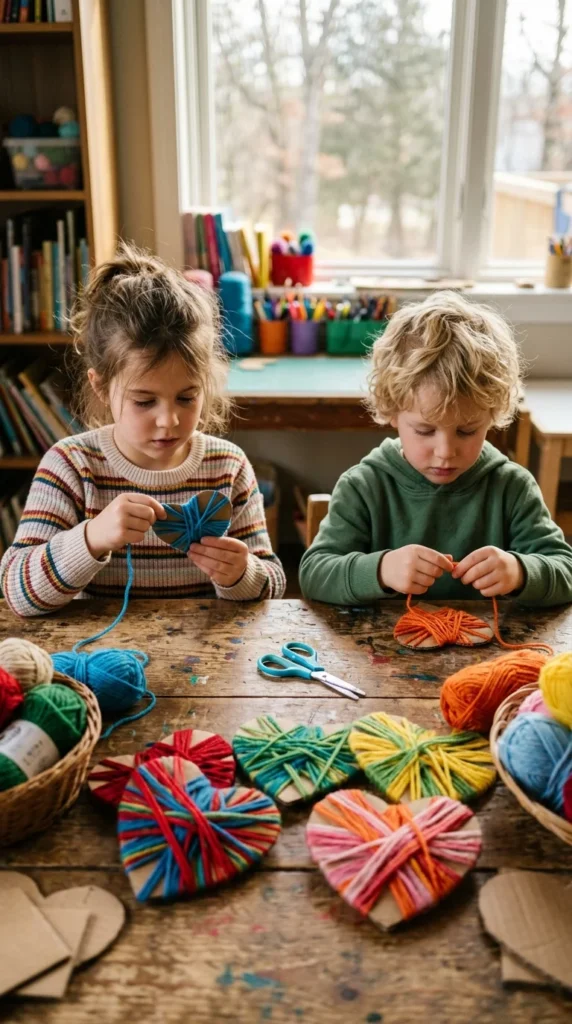
Yarn-wrapped cardboard hearts are relaxing crafts for beginners. The repeated wrapping motion feels calming while still keeping kids focused and creative.
Adults can cut heart shapes from cardboard boxes ahead of time. Children then wrap colorful yarn around the shapes until the cardboard is mostly covered.
Different yarn colors create striped or rainbow patterns. Some kids also glue buttons or beads onto the finished hearts for extra decoration.
This activity stays inexpensive because recycled cardboard works perfectly. Leftover yarn from knitting or sewing projects also gets reused instead of wasted.
The craft helps children practice patience and coordination. Wrapping yarn carefully around the edges strengthens hand control too.
Finished hearts make sweet decorations for bedrooms or classrooms. Kids may also gift them to grandparents or friends.
Older children can create more complicated wrapping patterns. Younger kids usually enjoy the simple repetitive motion most of all. Both approaches create colorful handmade decorations.
12. Cotton Ball Sheep Craft
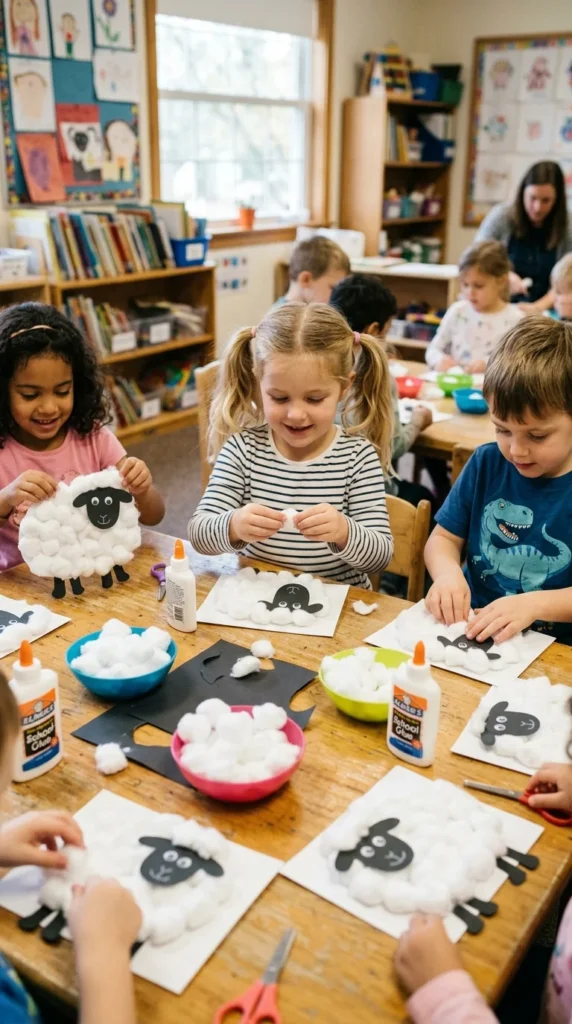
Cotton ball sheep crafts are soft, simple, and fun for younger kids. The fluffy texture makes the project feel different from regular paper crafts.
Children glue cotton balls onto paper sheep outlines to create wool. Black paper faces and little ears finish the look. The results always appear cute and playful.
This craft works well during farm lessons or springtime activities. Teachers often pair it with animal stories or songs about sheep.
Supplies stay affordable because cotton balls come in large inexpensive bags. Scrap paper works perfectly for the faces and legs too.
Younger children practice gluing carefully while placing the cotton balls. Older kids may add grass, clouds, or small farm scenes around the sheep.
The activity also helps kids explore texture during crafting. Many children enjoy touching the fluffy cotton while creating their animals.
Finished sheep crafts look cheerful hanging on walls or classroom bulletin boards. Parents often save them because they capture early childhood creativity so well.
13. Cupcake Liner Flowers
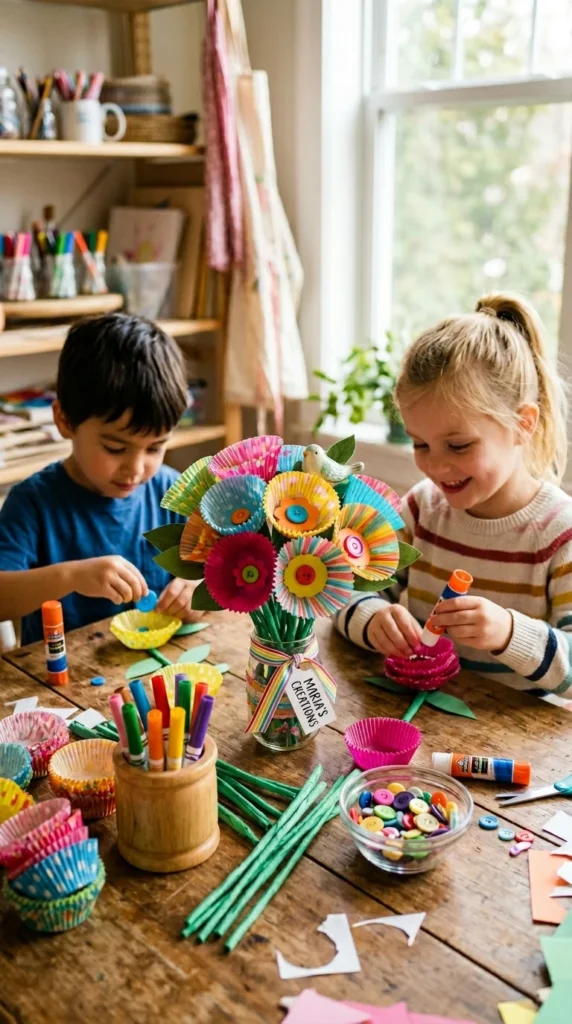
Cupcake liner flowers create bright artwork with very little effort. Kids enjoy flattening and layering the colorful liners into flower shapes.
Children glue cupcake liners onto paper stems and add buttons or paper circles in the middle. Layering different liner sizes creates fuller flowers with extra color.
This project works well for spring, birthdays, or homemade cards. The flowers also stay flat, which makes them easy to display or mail.
Cupcake liners come in many colors and patterns at low prices. Families often already have extra liners sitting in kitchen drawers too.
Younger children can focus on gluing shapes onto paper. Older kids may create bouquets, flower gardens, or vase scenes with more details.
Markers or crayons can add butterflies, sunshine, or grass around the flowers afterward. Small additions make every artwork feel unique.
The finished crafts brighten refrigerators, walls, or classroom displays. Kids enjoy seeing their colorful flowers displayed around the house.
14. Clothespin Airplanes
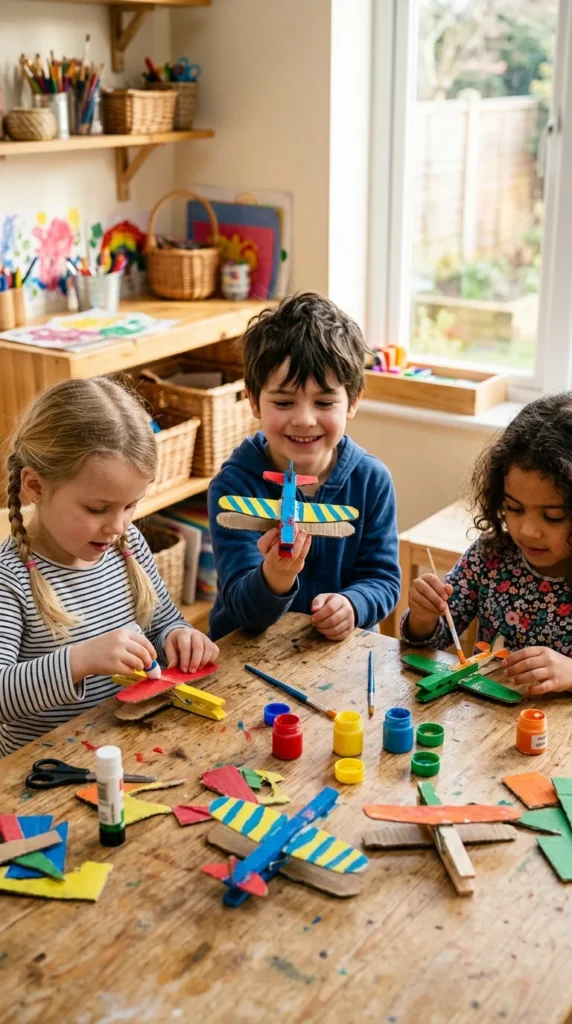
Clothespin airplanes are tiny crafts kids love playing with afterward. The simple design makes them perfect for beginners who enjoy building projects.
Wooden clothespins become airplane bodies. Cardboard or craft sticks form the wings. Kids can paint the planes in bright colors or add stickers for decoration.
Once finished, children often race the airplanes through the house. Simple crafts that become toys usually keep kids interested longer.
The supplies stay inexpensive and easy to find. Recycled cardboard from cereal boxes works perfectly for wings too.
Younger children may need help attaching the wings securely. Older kids can experiment with larger wings or layered designs.
Teachers sometimes connect this project with lessons about transportation or flying machines. Parents may use it during rainy afternoons indoors.
Finished airplanes fit easily into toy boxes or backpacks, so kids can keep enjoying them long after craft time ends.
15. Tissue Paper Sun Catchers
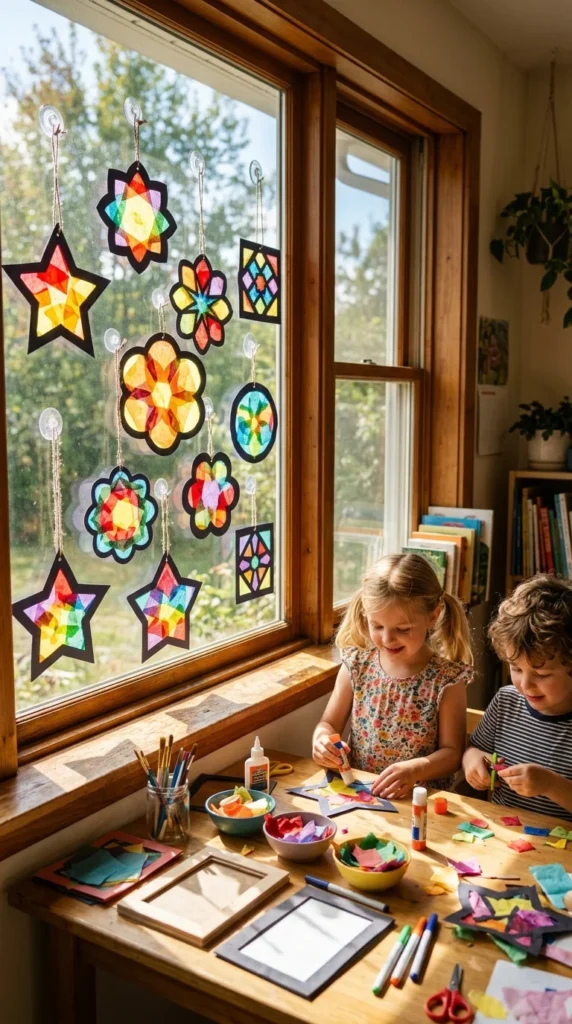
Tissue paper sun catchers create colorful window decorations children enjoy making and displaying. The glowing sunlight through the paper makes the results feel magical.
Kids glue small tissue paper pieces onto contact paper or clear plastic sheets. Different colors overlap to create bright stained-glass effects when sunlight shines through.
Simple shapes like hearts, stars, or circles work best for beginners. Adults can cut the outlines ahead of time for younger children.
Tissue paper packs stay affordable and last through many projects. Leftover gift wrap tissue also works perfectly.
This craft helps children practice cutting and arranging small pieces carefully. At the same time, the activity stays relaxed and playful.
Finished sun catchers instantly brighten windows at home or school. Kids love seeing their artwork glow during sunny afternoons.
Older children may create patterns or layered color designs. Younger kids usually enjoy placing random colorful pieces across the shape. Both styles turn out beautiful in the sunlight.
16. Button Tree Art
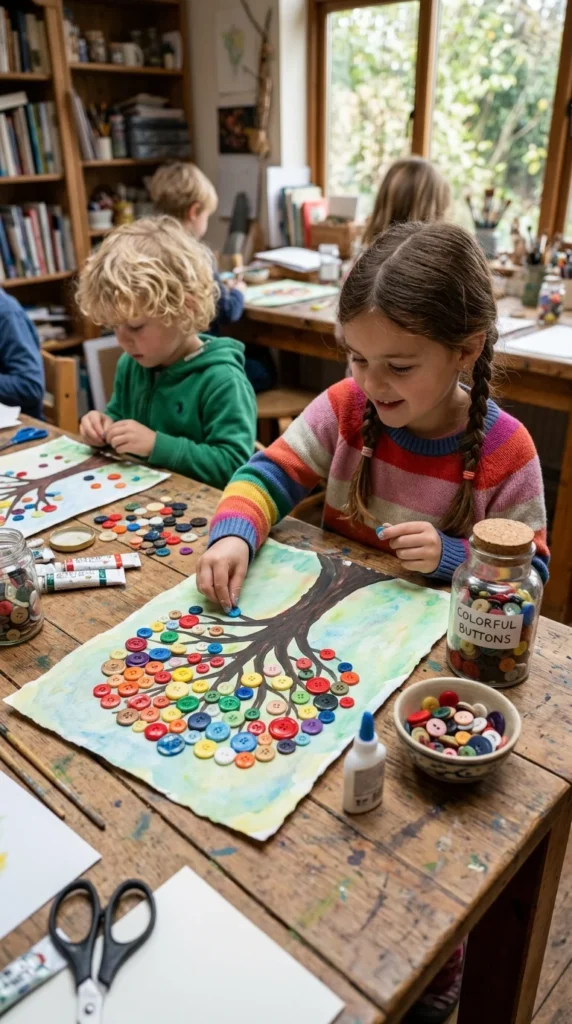
Button tree art combines painting and collage into one simple beginner project. Kids enjoy sorting through colorful buttons while designing their trees.
Children paint or draw tree trunks onto paper first. Afterward, they glue buttons around the branches to create leaves. Different button sizes make the trees look more playful and textured.
This activity works well during fall or spring craft sessions. Seasonal button colors can match the time of year too.
Families often already have spare buttons at home, which keeps the project inexpensive. Thrift stores also sell button jars at low prices.
Younger children practice careful gluing while placing the buttons. Older kids may create detailed scenes with grass, birds, or colorful skies.
The finished artwork looks decorative enough for bedroom walls or classroom displays. Parents often enjoy framing the completed projects too.
Button trees also teach children that everyday household items can become art supplies. That idea encourages creativity during future crafts.
17. Straw Necklace Beads
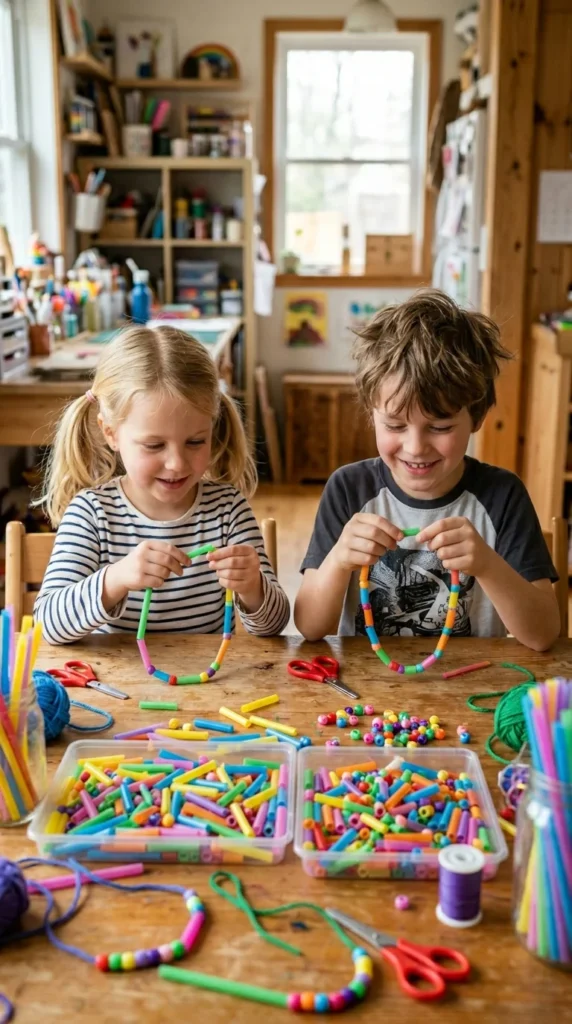
Straw bead necklaces are easy crafts that help children practice coordination and patience. The steps stay simple, but kids still feel proud wearing the finished jewelry.
Adults cut drinking straws into small pieces first. Children then thread the colorful pieces onto yarn or string to create necklaces or bracelets.
Mixing straw colors creates fun patterns. Some kids prefer rainbow styles, while others like repeating designs.
This activity stays very affordable because straws and yarn cost little. Leftover beads can also mix into the project for extra detail.
Threading the pieces helps strengthen fine motor skills. Younger children especially benefit from practicing careful hand movement during the activity.
Finished necklaces become wearable crafts instead of decorations sitting unused. Kids often enjoy gifting them to friends or family members too.
Older children may add charms or letter beads for personalization. Younger beginners usually enjoy simply threading colorful pieces together.
18. Cardboard Tube Rockets
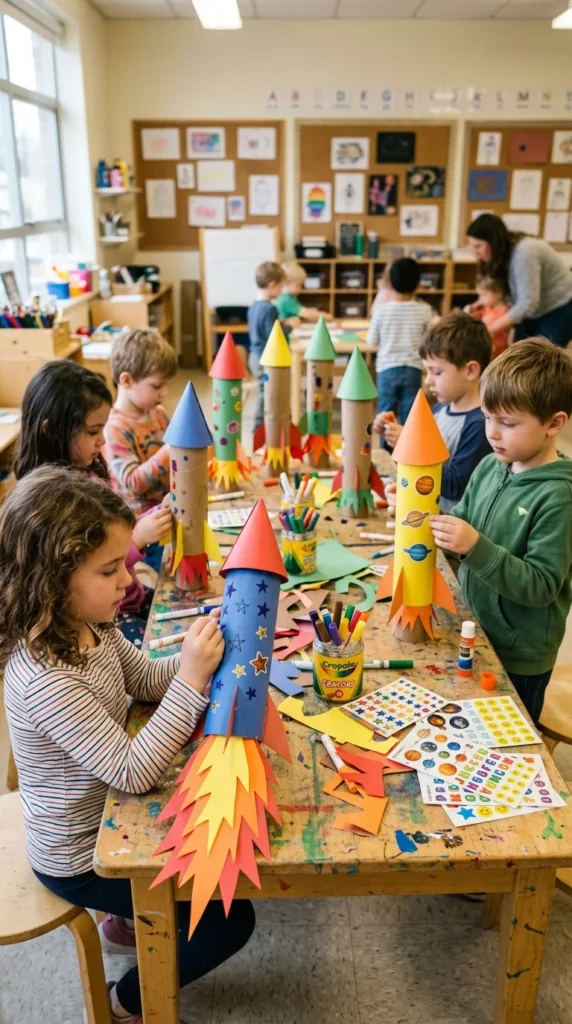
Cardboard tube rockets combine crafting with imaginative space play. Kids enjoy building their own pretend rockets from simple recycled materials.
Empty cardboard tubes form the rocket bodies. Paper cones create the tops, while tissue paper flames add colorful rocket fire underneath.
Children can decorate the rockets with markers, stickers, foil, or paint. Every rocket ends up looking different, which keeps the project exciting.
This craft works well during space-themed lessons or rainy indoor afternoons. Kids often continue pretending to travel through space after crafting ends.
Using recycled cardboard helps keep costs low. Families can save tubes from paper towels or wrapping paper instead of throwing them away.
Younger children may need help attaching the cone tops securely. Older kids may design detailed rockets with windows or astronaut drawings.
Finished rockets look fun displayed in bedrooms or classrooms. Kids usually feel proud seeing their handmade spacecraft standing upright afterward.
19. Sticker Story Scenes
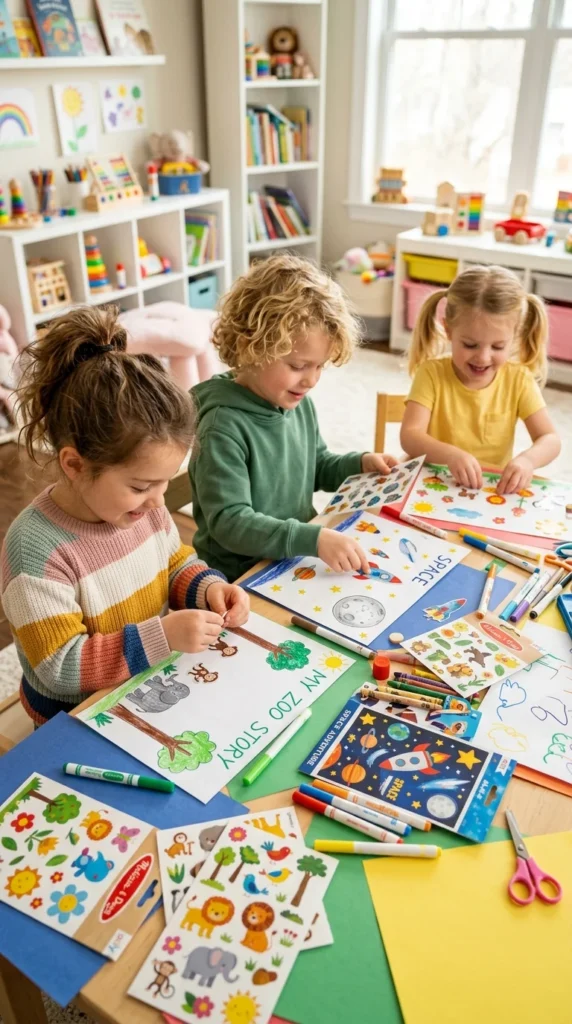
Sticker story scenes give children a low-mess craft option packed with creativity. Kids use stickers to build tiny worlds and tell imaginative stories.
Large paper sheets work best for this activity. Children place stickers across the page to create scenes like jungles, farms, oceans, or outer space adventures.
Markers and crayons can add roads, clouds, grass, or extra characters afterward. Simple drawings make the sticker worlds feel more complete.
This project stays inexpensive because sticker books often contain hundreds of reusable stickers. Families can also reuse old notebooks or printer paper.
Younger children enjoy placing stickers freely across the page. Older kids may create detailed storylines with speech bubbles or action scenes.
Sticker activities also help improve hand coordination while peeling and placing small pieces carefully.
Finished story pages become fun keepsakes children enjoy revisiting later. Parents often notice kids spending long stretches focused quietly on this simple activity.
20. Pom-Pom Monsters
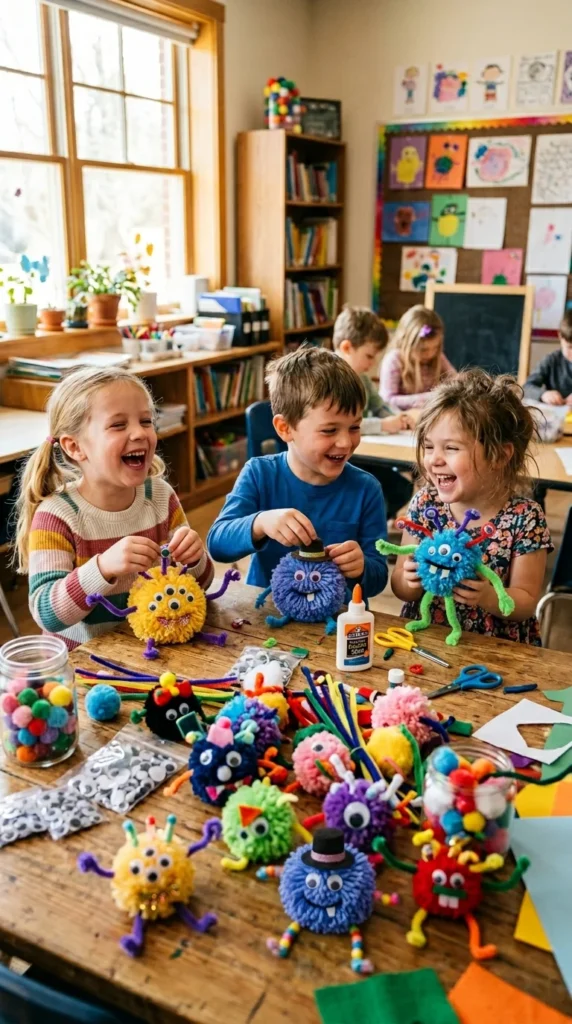
Pom-pom monsters are playful beginner crafts that allow kids to create silly creatures without strict rules. The goofy designs usually make children laugh throughout the activity.
Large craft pom-poms become the monster bodies. Kids glue on googly eyes, paper teeth, pipe cleaner arms, or tiny felt ears to create funny faces.
There are no wrong designs during this project. Some monsters end up adorable, while others look wonderfully ridiculous. That freedom helps children relax creatively.
Pom-poms and pipe cleaners stay affordable in large craft packs. Families can use leftover scraps from older projects too.
Younger children practice gluing and arranging pieces carefully. Older kids may invent monster names, stories, or personalities afterward.
The finished creatures become toys kids can play with immediately. Small monster collections often grow after children realize how fun they are to create.
Parents and teachers appreciate the low preparation time too. The activity starts quickly and keeps kids entertained for quite a while.
Conclusion
Simple crafts give kids a chance to create, explore, and stay busy without expensive supplies or difficult steps. Many beginner projects use recycled materials or basic household items, which keeps crafting affordable for families and classrooms. These activities also help children practice creativity, coordination, patience, and imagination while having fun. Whether kids paint rocks, build rockets, or make fluffy sheep, each project offers something playful and memorable. Try a few ideas during quiet afternoons, weekend family time, or classroom activities, and watch children light up with excitement as their creations come to life.