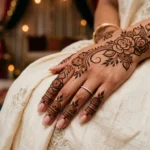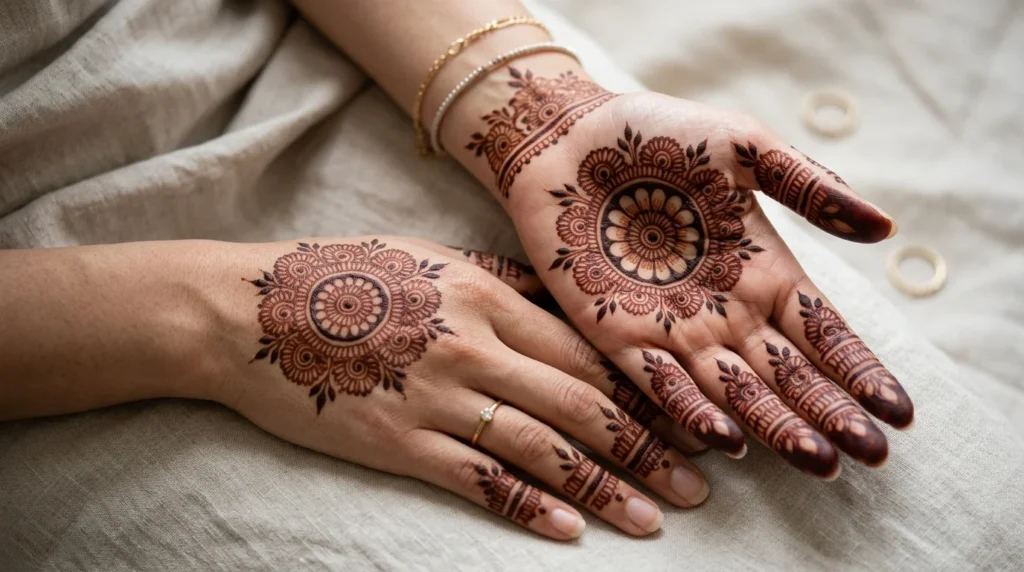
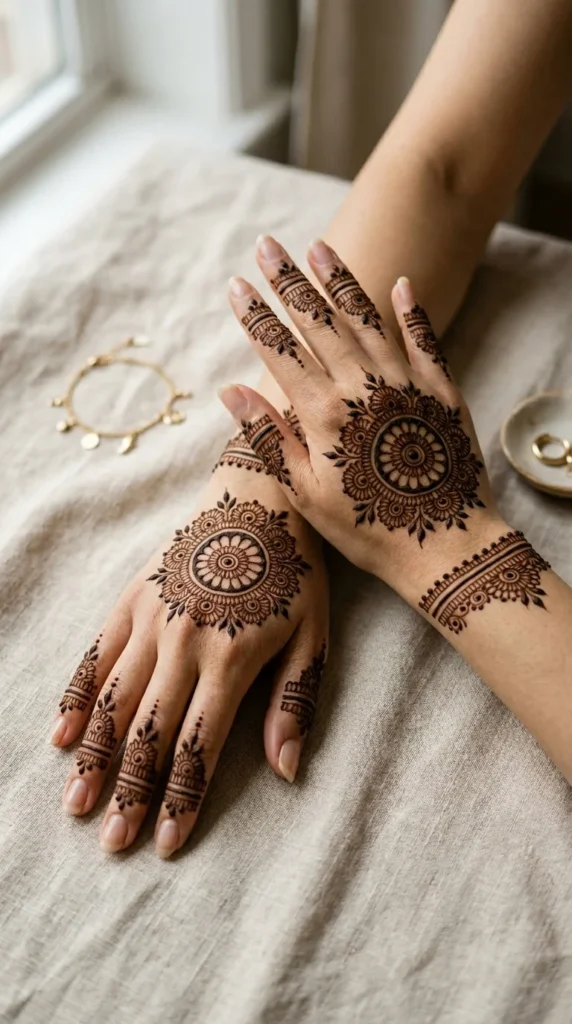
Circle mehndi designs have a timeless charm that works for weddings, festivals, family events, and casual gatherings. The balanced shape creates a neat and graceful style that looks beautiful on hands of every size. Some patterns feel bold and dramatic, while others stay simple and airy. That flexibility makes circle mehndi popular for beginners and experienced artists alike.
Many people love circle designs because they are easy to customize without spending a lot of money on professional services. A small cone of henna, a steady hand, and a little patience can create stunning results at home. These patterns also pair well with bangles, rings, and traditional outfits without looking too busy.
The ideas below explore different ways to style circular mehndi art. Some focus on floral details. Others use geometric shapes or delicate finger accents. Each one brings a clean and balanced finish that feels stylish yet practical for everyday wear.
1. Minimal Mandala Circle
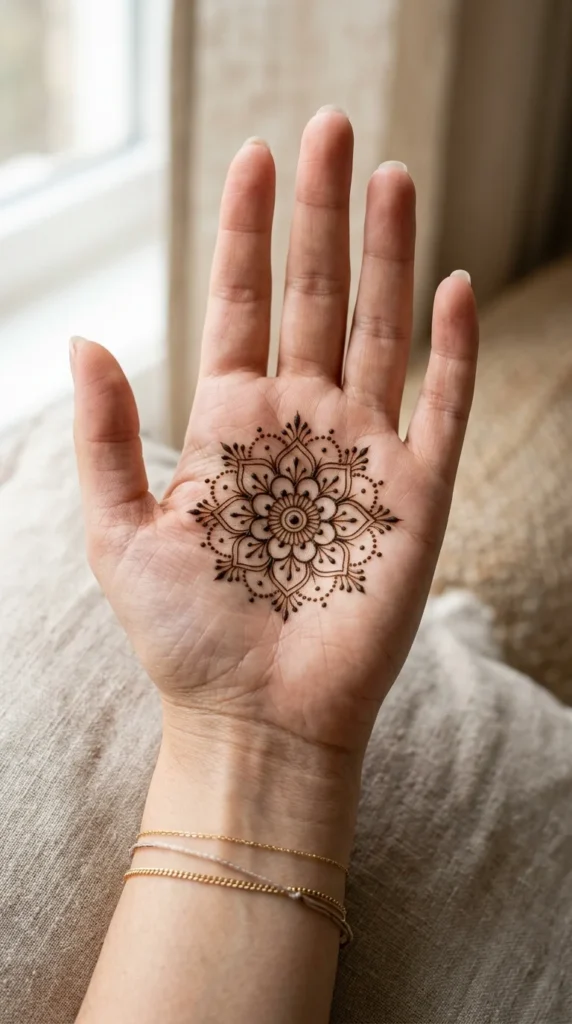
A minimal mandala circle works beautifully for people who prefer clean and lightweight mehndi styles. The design usually starts with one neat circle in the middle of the palm. Small petals, dots, and curved lines spread outward in even layers. The empty spaces around the pattern help the details stand out clearly.
This style looks great during casual events or family dinners. It also suits students and working women who want something simple without covering the entire hand. Since the design uses fewer lines, beginners often find it easier to practice at home.
A budget-friendly tip is to use household objects like bottle caps or bangles to trace the base circle lightly before applying henna. That trick helps create a smooth shape without extra tools. You can also add tiny finger details later if the design feels too plain.
Pair this pattern with thin rings or light bangles for a polished look. Dark henna stains make the delicate lines appear sharper. Keeping the hand warm after application can help the color deepen naturally over time.
2. Floral Circle With Leaf Borders
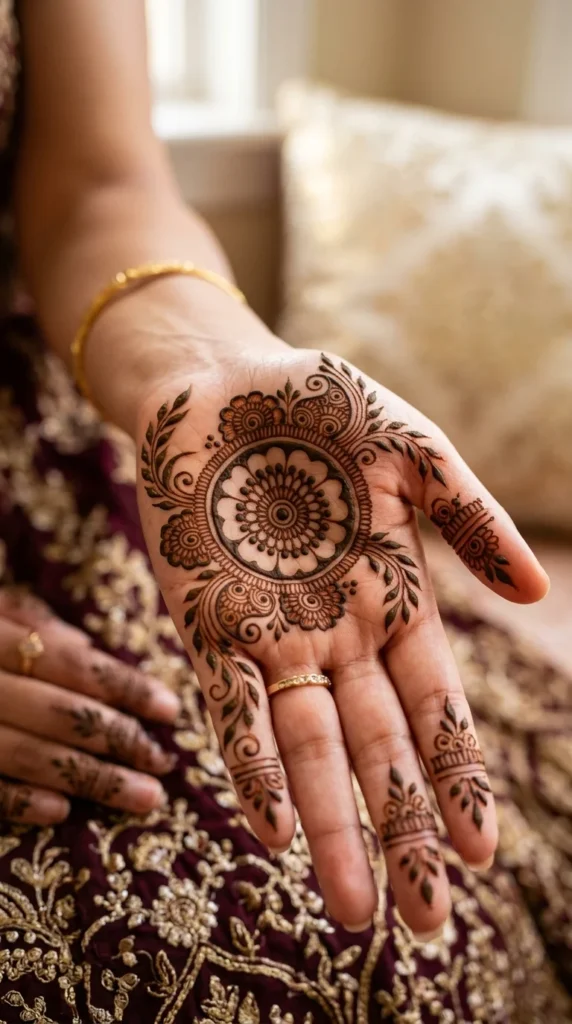
Floral circles with leafy borders create a soft and graceful mehndi style that feels classic without appearing heavy. The center usually features layered flowers arranged in a circular layout. Small leaf chains frame the outer edge and give the design more movement.
This pattern works especially well for festive gatherings and engagement functions. The leafy accents make the design feel fuller while still keeping a balanced appearance. It also pairs nicely with traditional outfits that have floral embroidery or nature-inspired prints.
You can create this look at home by starting with large petals first. Once the flower shape feels balanced, add tiny leaves around the edges. Beginners often get cleaner results when they work slowly instead of rushing through the outer details.
For an affordable finishing touch, place a few dots near the wrist and fingers instead of filling every space with thick patterns. That saves henna while still making the design appear complete. A small amount of eucalyptus oil after drying may help create a richer stain.
3. Arabic Circle Pattern
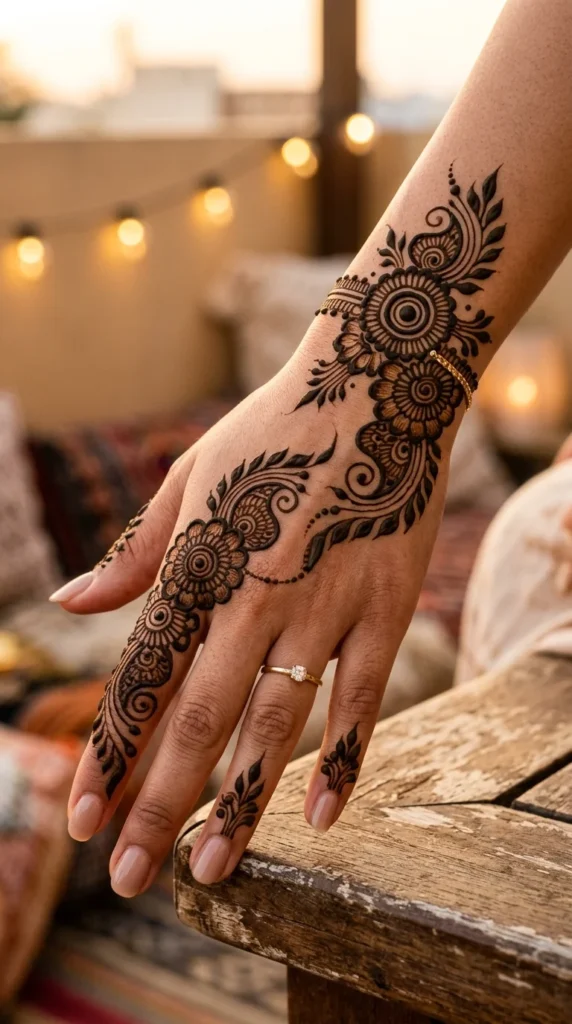
Arabic circle patterns combine bold circular flowers with flowing curves and open spacing. Unlike dense bridal mehndi, this style feels airy and relaxed. The circles often travel diagonally across the hand instead of staying only in the center.
Many people choose this design because it looks stylish without taking hours to apply. Thick outlines and larger petals make the process easier for beginners. The open spaces also help the design appear neat even if every line is not perfect.
A simple DIY method is to sketch one large flower first and connect smaller circles using curved vines. You do not need advanced drawing skills for this layout. Repeating similar shapes keeps the design balanced naturally.
This style works well for Eid celebrations, dinner parties, and small family events. It pairs nicely with modern outfits and traditional dresses alike. Adding fingertip shading can create extra contrast without making the hand look overcrowded.
If you want a darker finish, leave the dried henna paste on overnight. Wrapping the hand loosely with medical tape can help protect the design while sleeping.
4. Jewelry-Inspired Circle Mehndi
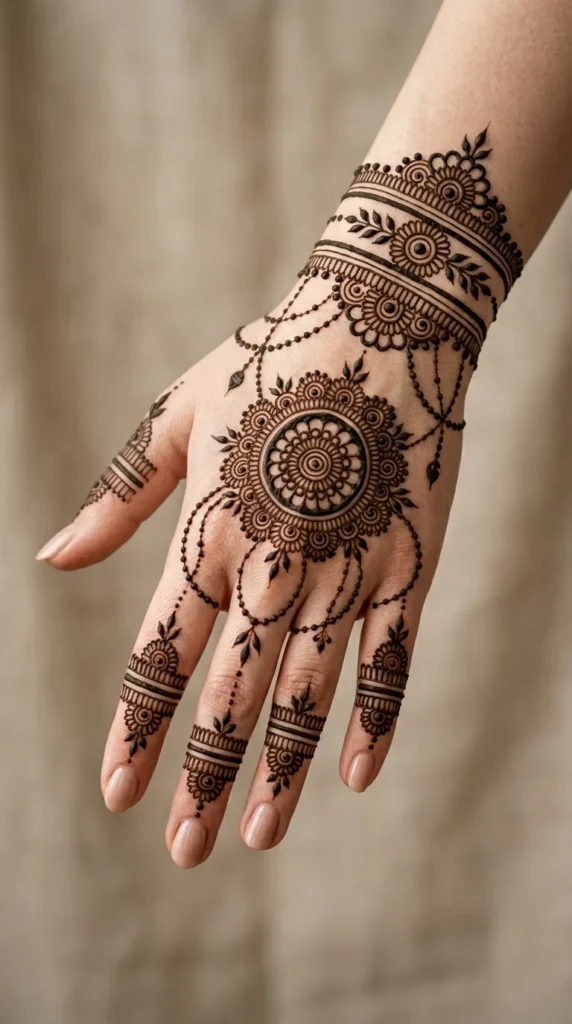
Jewelry-inspired circle mehndi creates the illusion of decorative hand accessories using henna alone. The main circular pattern usually sits on the palm while thin chains connect the design to the fingers and wrist. Tiny dots imitate gemstones and bracelet details.
This style is perfect for people who enjoy delicate patterns instead of bold coverage. It looks especially attractive with sleeveless outfits because the wrist details stand out clearly. The design also photographs beautifully during celebrations and family pictures.
You can recreate this style at home using simple repetitive lines. Start with the center circle first. Then extend thin chain patterns toward the fingers one section at a time. Keeping equal spacing between chains makes the design look cleaner.
A practical budget tip is to leave some finger areas empty rather than filling every section with tiny details. That saves time and henna while maintaining the jewelry effect. Small rhinestones can also be added temporarily for special events.
This mehndi style pairs nicely with simple bangles and slim rings. Since the design already resembles jewelry, heavy accessories are not necessary for a polished appearance.
5. Peacock Circle Design
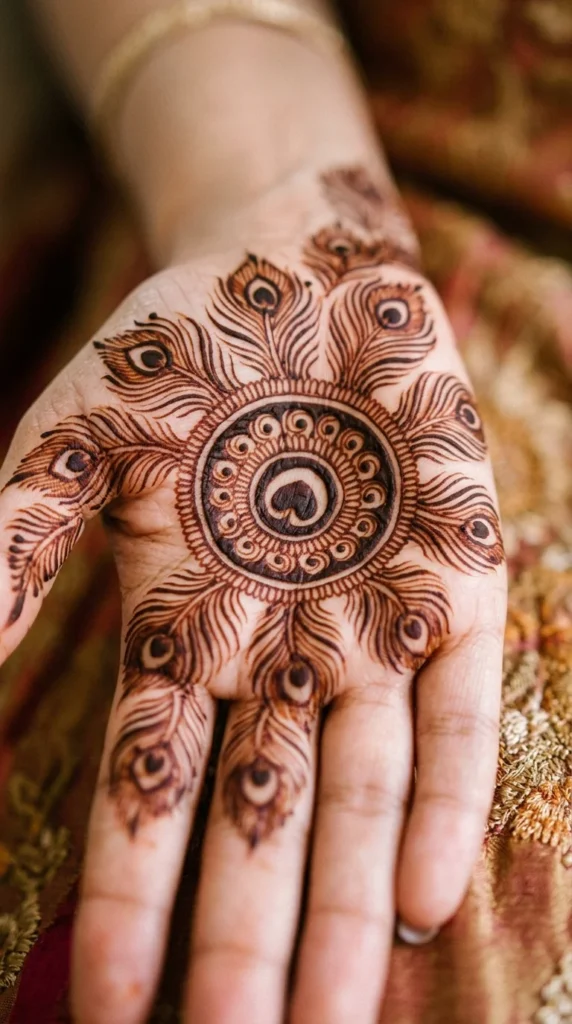
Peacock circle mehndi mixes traditional beauty with artistic detail. The design usually begins with a balanced circular base. Feather-like curves and eye-shaped peacock details spread outward from the center. This creates a rich and decorative finish.
Many brides and wedding guests love this pattern because it feels festive without covering every inch of skin. The flowing feather details create movement while the circular center keeps the layout organized.
Beginners can simplify the look by drawing basic peacock feathers instead of very detailed ones. Thick outlines also make the pattern easier to control. Once the main structure dries, tiny dots can fill empty spaces around the edges.
This style looks stunning with colorful traditional dresses and embroidered sleeves. It also works beautifully on the back of the hand where the feather details remain visible in photos.
For a budget-friendly approach, use only one peacock feature instead of repeating it across the whole hand. A single statement detail often looks more elegant than overcrowded designs. Proper aftercare like avoiding water for a few hours can help the stain appear darker and smoother.
6. Lotus Circle Mehndi
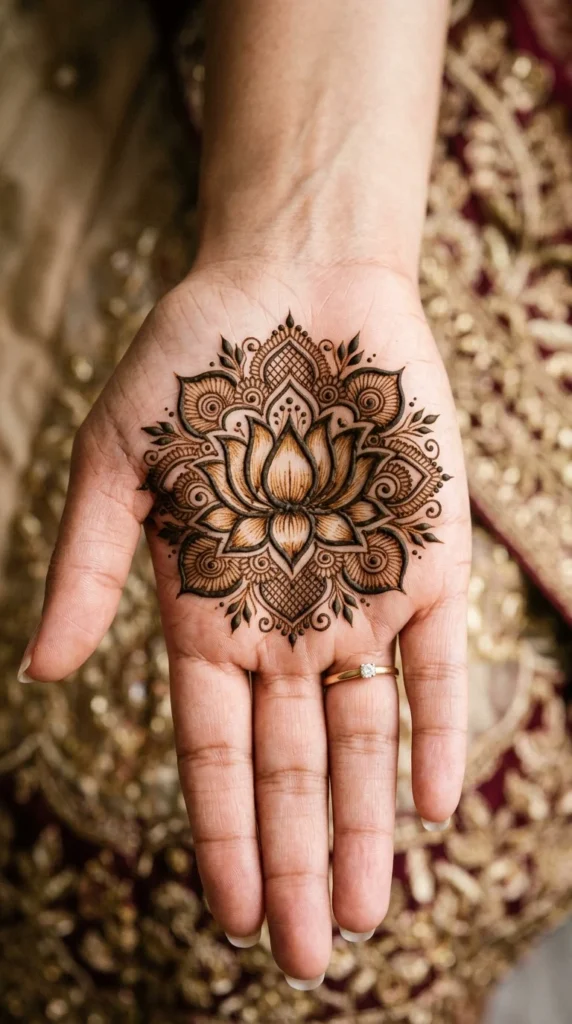
Lotus circle mehndi creates a calm and graceful appearance that suits both simple and festive occasions. The lotus petals usually spread evenly around the circular center, creating a neat floral symmetry. Fine lines and dots give the design a soft finish without making it appear crowded.
This style is a favorite for people who enjoy floral patterns but still want something organized and clean. The layered petals create depth while the circular layout keeps the design balanced. It looks beautiful on both palms and the back of the hand.
A practical DIY tip is to sketch larger lotus petals first before adding tiny details inside them. That approach helps maintain even spacing. You can also keep the outer layers thin for a lighter appearance.
This mehndi style pairs nicely with pastel outfits and delicate jewelry. Small finger accents can make the overall look feel more complete without taking much extra time. If you prefer a softer finish, leave a few open spaces between petals instead of filling every gap with dots.
Applying lemon and sugar mixture after the henna dries may help the stain appear richer. Even a small lotus circle can create an elegant and polished effect.
7. Geometric Circle Art
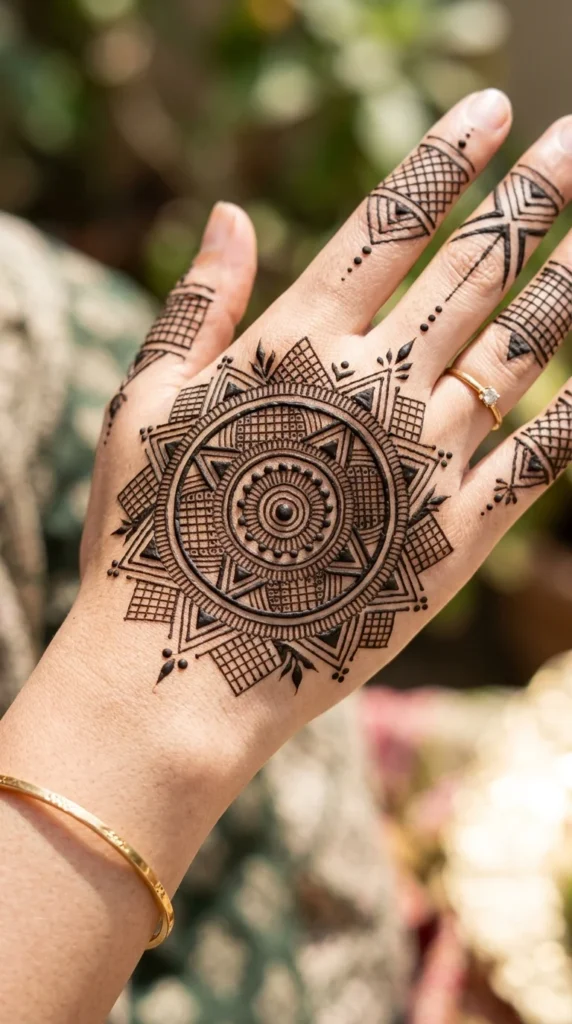
Geometric circle mehndi offers a modern twist on traditional patterns. Instead of floral petals, the design uses shapes like triangles, diamonds, grids, and straight lines arranged around a circular base. The result feels bold, stylish, and organized.
This pattern works well for people who enjoy modern fashion and minimal styling. The sharp lines create a clean finish that pairs nicely with contemporary outfits. It also suits casual gatherings where heavy bridal mehndi may feel too formal.
Beginners can practice geometric patterns using paper before applying henna directly to the skin. Rulers are not necessary, but steady and slow movements help create straighter lines. Repeating the same shapes keeps the design balanced naturally.
A smart budget tip is to focus the detailed work only near the center of the palm. Leaving the wrist and fingers simpler can save time while still creating a polished appearance. Thin finger bands also complement geometric layouts nicely.
This design often looks darker and sharper after a few hours because bold outlines stand out clearly. If you want extra contrast, combine thick outer shapes with tiny inner dots for added detail.
8. Finger-Focused Circle Mehndi
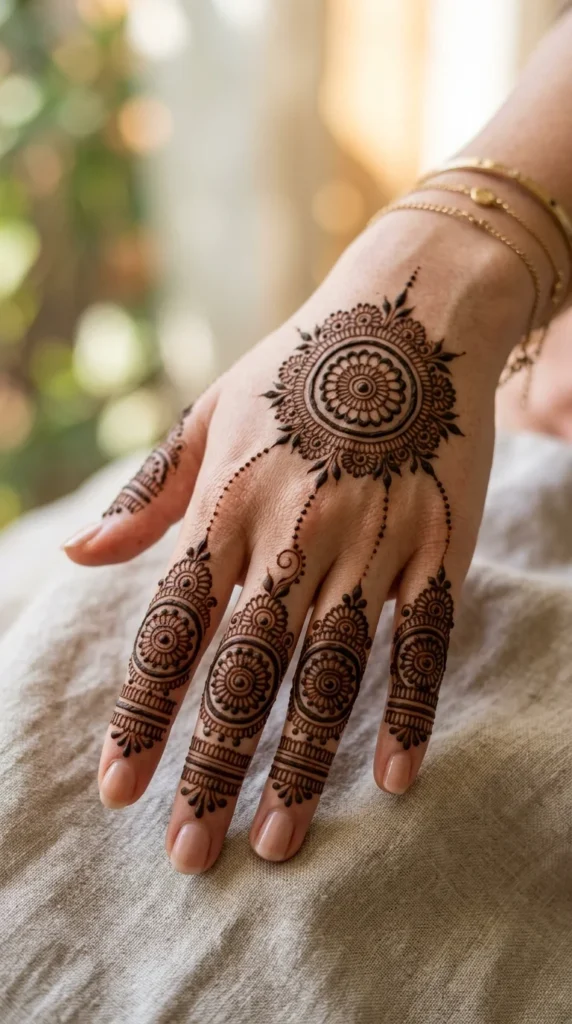
Finger-focused circle mehndi places more attention on the fingers while keeping the palm design simple. Small circular patterns appear on each finger, often connected by thin vines or dotted lines. A minimal mandala in the center ties the entire design together.
This style works well for people who want a decorative look without covering the whole hand. Since fingers remain highly visible during daily activities, the design stands out naturally even with less detail on the palm.
A beginner-friendly approach is to create one circle per finger using simple petals or dots. Repeating the same design across all fingers creates balance quickly. The palm can stay minimal for a lighter finish.
This pattern pairs beautifully with nail polish and rings because the finger details draw attention upward. It also photographs well during close-up hand poses at celebrations and gatherings.
To save henna and time, avoid very dense fingertip filling. Thin bands and small floral circles often create a cleaner appearance. Leaving some skin visible between details helps the design look neat instead of overcrowded.
9. Bridal Full-Hand Circle Design
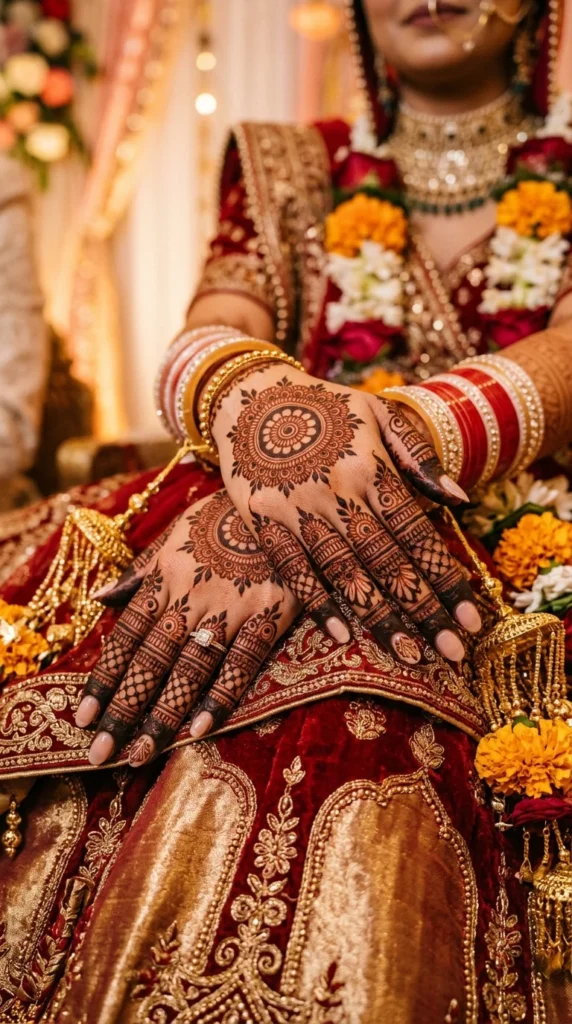
Bridal full-hand circle mehndi creates a rich and decorative appearance for weddings and engagement events. The design usually features several layered mandalas connected with floral vines, net patterns, and detailed wrist accents. The balanced circles help the full design feel organized instead of messy.
This style often takes more time, but the result looks dramatic and elegant in wedding photos. Many brides choose circular layouts because they create symmetry across both hands. Matching designs on each palm can make the overall look feel more polished.
A practical way to simplify the process is to repeat similar elements throughout the design. Using the same flower style or border pattern saves effort while keeping the layout consistent. Beginners practicing bridal mehndi can start with one hand before attempting both.
Budget-friendly bridal mehndi at home becomes easier when family members help with filling patterns and dots. You do not always need professional artists for beautiful results. Practicing on paper beforehand can improve confidence.
Dark stains make bridal designs stand out more clearly. Keeping the dried paste on for several hours and avoiding water afterward may help the color deepen naturally.
10. Half-Moon Circle Pattern
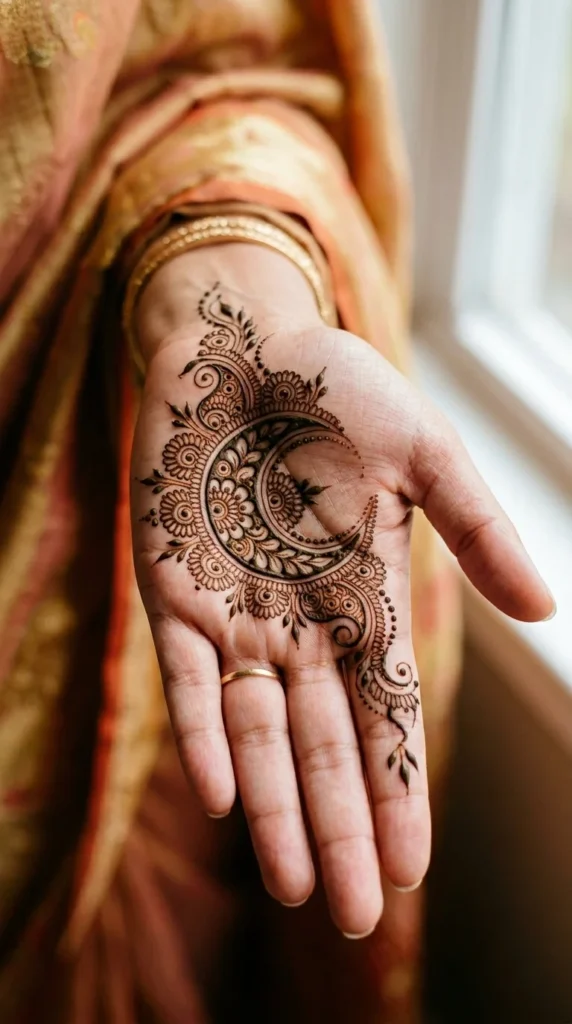
Half-moon circle mehndi adds a creative twist to traditional circular patterns. Instead of using complete circles everywhere, the design combines crescents and curved shapes around the main mandala. This creates movement while still maintaining balance.
The style works well for people who enjoy artistic details without very dense coverage. Curved lines soften the overall appearance and make the design feel graceful. It suits festive gatherings, evening events, and family celebrations.
A simple DIY method is to begin with one center circle and surround it with crescent shapes instead of full petals. Small dots along the curves help create a finished look. Beginners often find crescents easier to draw than very detailed flowers.
This pattern pairs beautifully with flowy sleeves and delicate bracelets. Since the design already contains soft curves, minimal jewelry usually works best. Open spaces between crescents also help the henna stain stand out clearly.
For a polished appearance, keep the crescent sizes consistent throughout the design. Even small details can create a stylish effect when placed carefully. The result feels artistic, balanced, and easy to wear for many occasions.
Conclusion
Circle mehndi designs offer a beautiful mix of balance, creativity, and elegance. From minimal mandalas to detailed bridal patterns, these styles work for nearly every occasion and skill level. The circular layouts create a clean structure that makes the designs feel polished without appearing overly complicated.
Many of these ideas can be recreated at home using affordable henna cones and simple techniques. Small details like dots, leaves, finger accents, and floral layers can completely change the mood of the design. You can keep things minimal for casual gatherings or add richer details for weddings and celebrations.
Trying different circle styles is also a fun way to discover what feels most comfortable for your personal style. A little practice and patience can go a long way toward creating elegant mehndi art that feels stylish and timeless.