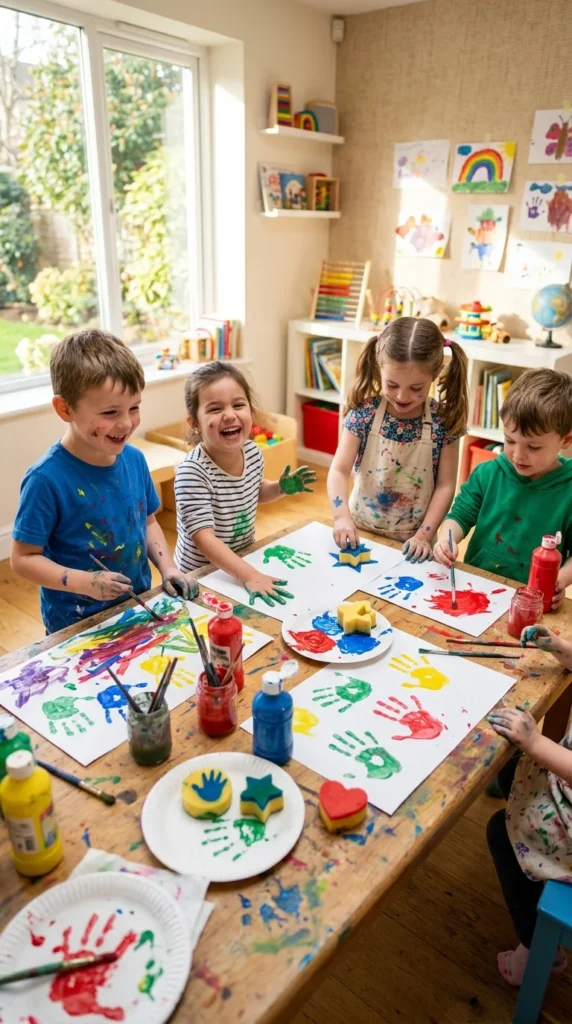
Painting crafts give kids a simple way to stay busy while using their imagination. A few basic supplies can turn an ordinary afternoon into colorful playtime full of laughter and creativity. These ideas work well for rainy days, classroom projects, birthday activities, or quiet time at home. Most of them use affordable materials that are already sitting in kitchen drawers or craft bins. Kids can mix colors, make patterns, and create art they feel proud to show off. The best part is that painting crafts fit many age groups, so younger children and older kids can both join the fun without needing expensive supplies or complicated steps.
1. Rainbow Handprint Art
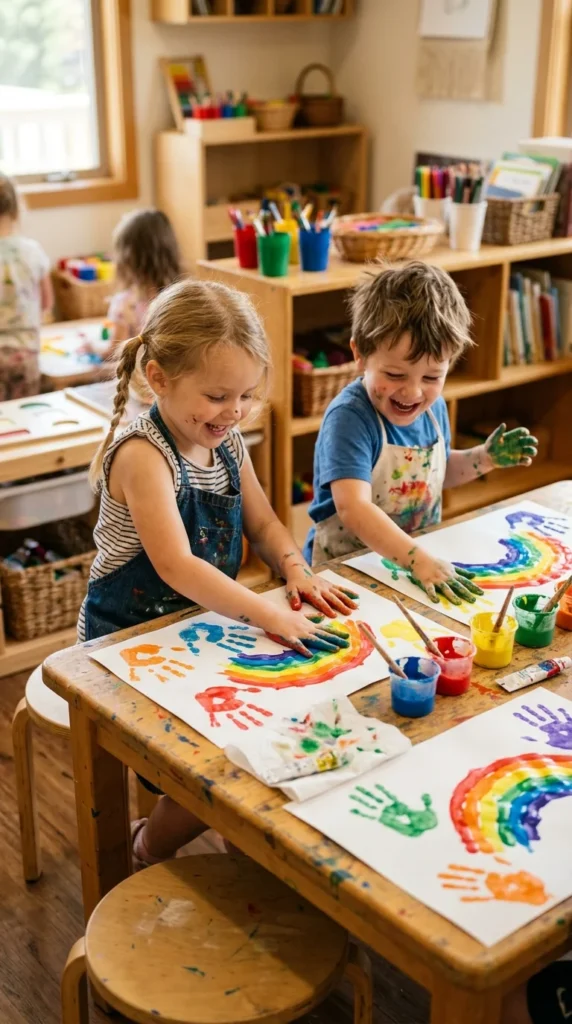
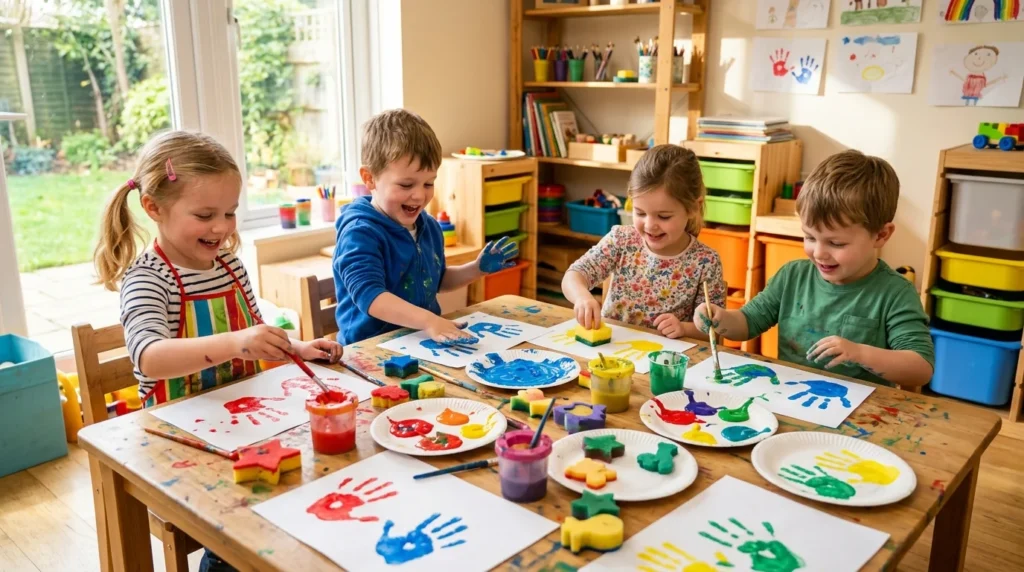
Handprint painting is one of the easiest ways to keep kids busy while making colorful memories. Children enjoy seeing their tiny hands turn into bright artwork they can hang on the wall or give to family members. Start with washable paint and large sheets of paper. Pour a few paint colors onto paper plates so kids can dip their hands safely.
Try arranging the handprints into a rainbow shape. Kids can overlap colors for a fun layered effect. Some children may enjoy making animals or flowers from the prints too. This activity works well for toddlers because there are no tricky steps involved.
Cleanup stays simple when you place newspaper or an old plastic tablecloth under the workspace. Keep wipes nearby for quick hand cleaning between colors. Cheap paintbrushes also help spread paint evenly on little hands.
Parents can save finished handprints in scrapbooks or frames. The project feels personal and playful while giving children a chance to explore color mixing and patterns in a relaxed way.
2. Paper Plate Planet Painting
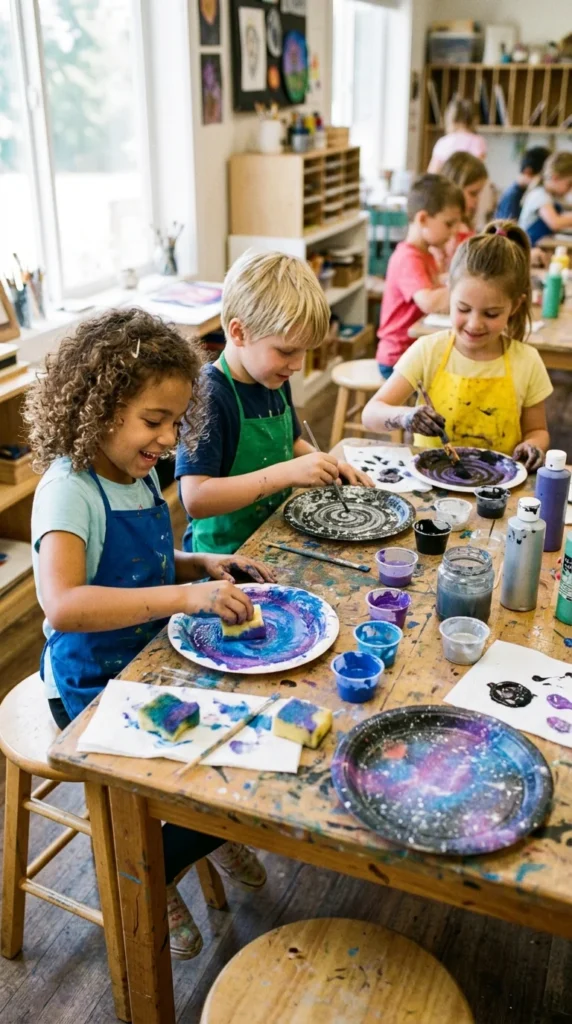
Paper plates make painting projects affordable and easy to manage. Kids can turn them into planets, moons, or entire solar systems using simple paint colors and household items. Start with dark paint as the base. Then let children dab lighter colors using sponges or cotton balls.
White paint splatters can become stars. Glitter glue adds sparkle without much effort. Older kids may enjoy creating rings around Saturn or painting swirling patterns that look like distant galaxies.
This activity works nicely during science lessons or weekend craft sessions. Cheap paper plates hold paint well and dry quickly. Hang the finished planets from string to create a homemade space display.
Children enjoy the freedom of creating imaginary worlds. Some may paint bright pink planets while others stick with realistic shades. Both ideas work perfectly because the activity focuses on creativity rather than perfect results.
Using old shirts as paint smocks keeps clothes safer from stains. Parents can also cut cardboard boxes into circles if paper plates are unavailable. The project stays fun, low-cost, and full of color from start to finish.
3. Sponge Stamp Painting
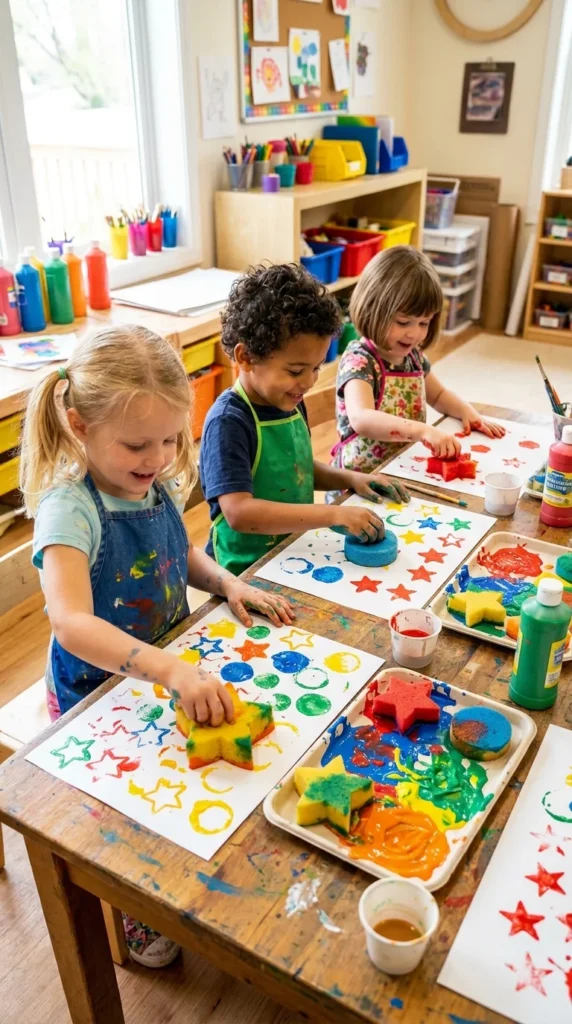
Sponge painting gives kids a fun way to create patterns without needing advanced painting skills. Cut kitchen sponges into simple shapes like hearts, stars, circles, or animals. Dip them lightly into paint and press them onto paper.
Children love seeing repeating patterns appear quickly. This keeps younger kids interested because they get fast results. Washable paint works best for easy cleanup and safer crafting.
Try using large sheets of paper for giant murals. Kids can mix colors or layer shapes to create busy backgrounds full of texture. Some children may enjoy making wrapping paper or homemade cards with their sponge stamps.
Old takeout containers make handy paint trays. This helps keep paint from spilling everywhere during active playtime. Drying racks or clothespins can hold finished artwork while the paint sets.
Sponge stamping also helps improve hand coordination in a playful way. Kids practice pressing gently, changing colors, and arranging shapes across the page. The craft feels creative without becoming stressful or messy beyond control.
4. Bubble Wrap Print Painting
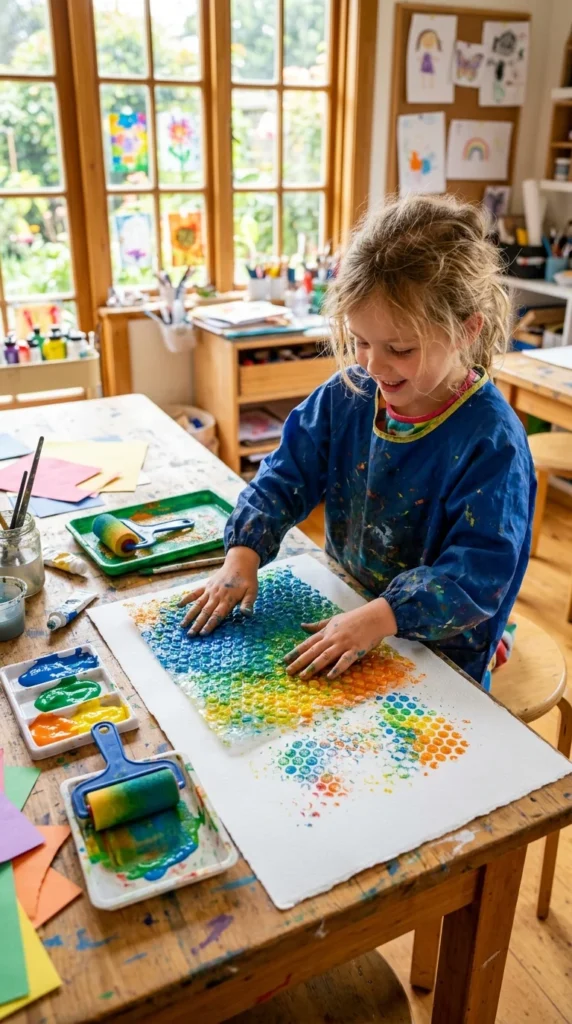
Bubble wrap painting turns packing material into a colorful art tool kids enjoy instantly. Cut bubble wrap into manageable pieces and tape them onto cardboard for easier handling. Children can roll paint onto the bubbles using foam brushes or mini rollers.
Once covered in paint, press the bubble wrap onto paper to reveal textured prints. The popping circles create interesting patterns that look playful and unique. Kids often enjoy experimenting with different colors and overlapping designs.
This activity works well for homemade backgrounds, greeting cards, or abstract art projects. It also uses leftover materials that might otherwise be thrown away, which helps keep craft costs low.
Protect tables with newspapers before starting. Bubble wrap tends to slide around when wet with paint, so taping the edges helps keep things steady for younger children.
Parents can encourage kids to try themed artwork too. Green bubble prints can become turtle shells. Blue prints may look like underwater bubbles. The project stays flexible and entertaining while giving children lots of freedom to create colorful designs.
5. Cotton Ball Cloud Painting
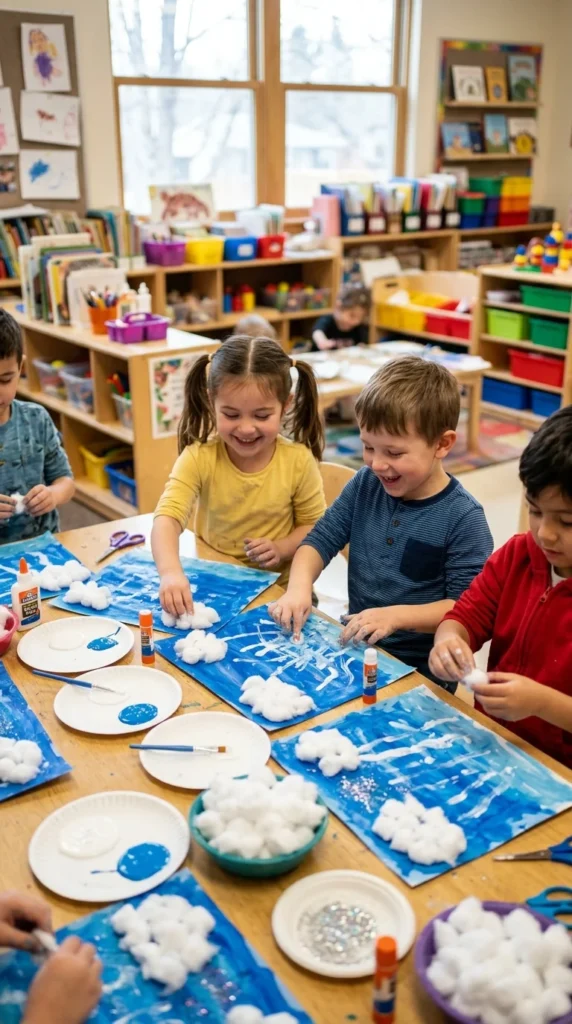
Cotton ball painting combines soft textures with simple painting fun. Kids start by painting a blue sky background using broad brush strokes. After the paint dries slightly, they glue cotton balls onto the paper to form fluffy clouds.
Some children enjoy adding rainbows, birds, or sunshine around the clouds. Others may paint nighttime skies with stars and moons. The craft allows many creative directions without requiring expensive supplies.
Cotton balls are inexpensive and easy to find. Even large groups of children can complete this activity on a small budget. Younger kids especially enjoy touching the soft texture while building cloud shapes.
Parents can help kids learn basic weather ideas during the project. Puffy clouds, storm clouds, and sunset skies all create different looks. This turns painting time into playful learning without feeling like schoolwork.
To reduce mess, place glue in shallow bowls with cotton swabs for easier application. Finished artwork looks bright and cheerful hanging on bedroom walls or classroom displays.
6. Rock Painting Animals
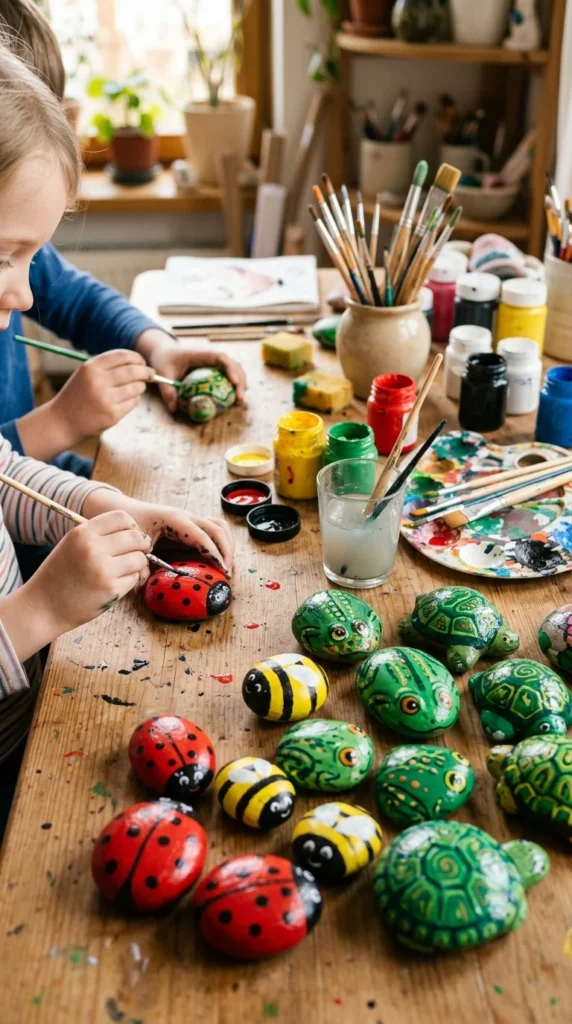
Rock painting gives kids a chance to create tiny art pieces they can keep outdoors or display indoors. Smooth rocks work best because paint spreads more evenly across the surface. Wash and dry the rocks before starting the activity.
Children can turn rocks into animals like ladybugs, frogs, turtles, or bees using simple shapes and bright paint colors. Small brushes help add eyes, dots, and stripes once the base coat dries.
This project feels exciting because kids transform ordinary stones into playful decorations. Painted rocks can sit in gardens, flowerpots, or bookshelves around the home.
Budget-friendly acrylic paint works well for this activity. Parents can also use paint pens for detailed lines if available. Newspaper under the workspace helps catch drips and splatters during painting time.
Older children may enjoy creating story characters or funny faces instead of animals. The project encourages imagination while giving kids something sturdy they can keep for a long time. It also works nicely for outdoor crafting during warm afternoons.
7. Straw Blow Painting
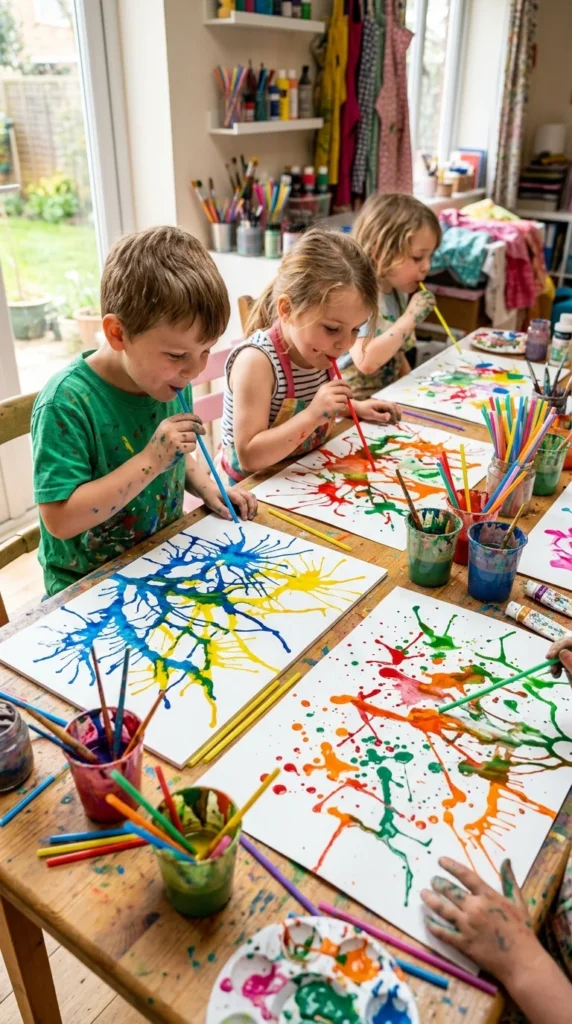
Straw blow painting creates exciting patterns that spread across the page in unexpected ways. Kids place watered-down paint drops onto paper and gently blow through straws to move the paint around.
The spreading paint forms branches, swirls, and splash effects that look dramatic and colorful. Children often enjoy guessing where the paint will travel next. Every design turns out different, which keeps the activity interesting.
This craft uses very few supplies. All you need are straws, paint, water, and paper. Disposable table covers help manage drips because the paint stays thin and runny during the activity.
Kids can turn their designs into trees, fireworks, coral reefs, or abstract art. Adding markers afterward helps create outlines or extra details once the paint dries.
Remind children to blow outward through the straw rather than sucking inward. Demonstrating the process first helps younger kids feel more comfortable before starting. The craft stays affordable, playful, and full of movement from beginning to end.
8. Finger Paint Garden Scene
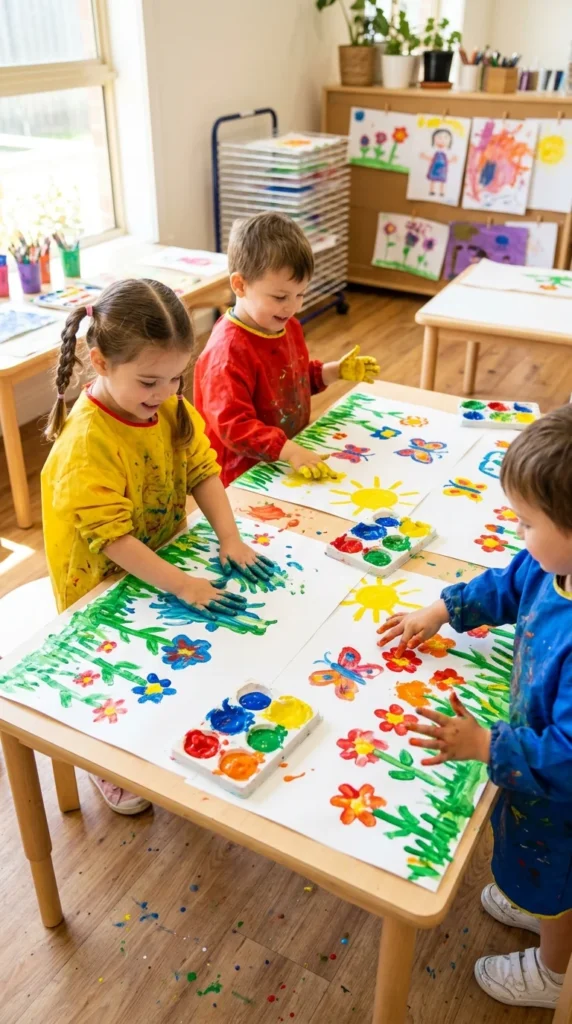
Finger painting gives kids complete freedom to explore colors and textures using their hands. Garden scenes work especially well because flowers, grass, and sunshine are easy for children to create with simple finger dabs and swirls.
Start with large sheets of paper and washable paint. Kids can press fingerprints into flower petals or drag paint across the page to form grass and tree trunks. There are no strict rules, which helps children relax during the activity.
This project fits many age groups. Toddlers enjoy the sensory side of finger painting, while older children can add butterflies, bugs, and detailed scenery.
Cheap plastic trays help organize paint colors without making a huge mess. Wet wipes nearby also make cleanup quicker between colors. Old clothes or oversized shirts protect outfits during active painting.
Parents often enjoy this craft because it captures children’s playful energy in a simple way. Finished artwork feels bright and cheerful, making it perfect for refrigerators, playrooms, or homemade gifts for relatives.
9. Ice Cube Paint Art
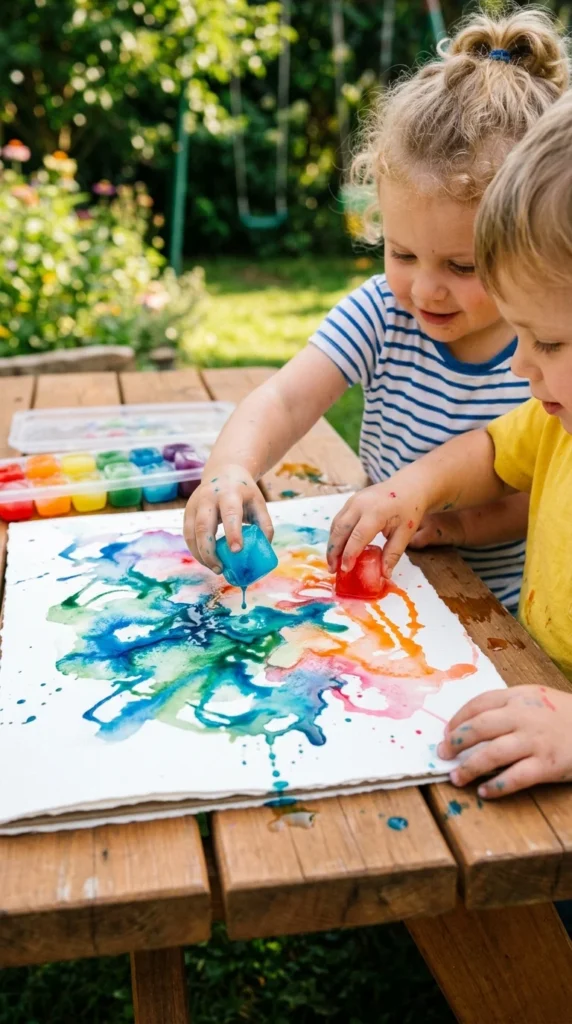
Ice cube painting combines art and sensory play in one simple activity. Fill ice cube trays with watered-down paint or food coloring, then freeze them with craft sticks inside for handles.
Kids use the frozen cubes like paintbrushes. As the ice melts, colors spread across the paper in soft streaks and watery patterns. Children enjoy watching the colors change as the cubes shrink during painting time.
This project works nicely outdoors on warm days because the melting ice can get messy. Thick paper or cardstock holds up better than thin paper when using watery paint mixtures.
Parents can freeze several color combinations for extra variety. Blue and purple create cool icy tones, while yellow and red make bright summer shades. Kids often enjoy blending colors naturally as the cubes slide across the paper.
The supplies stay inexpensive, and cleanup is simple with water-friendly surfaces. Ice painting feels different from regular brush painting, which helps keep children curious and engaged during creative playtime.
10. Cardboard Tube Firework Painting
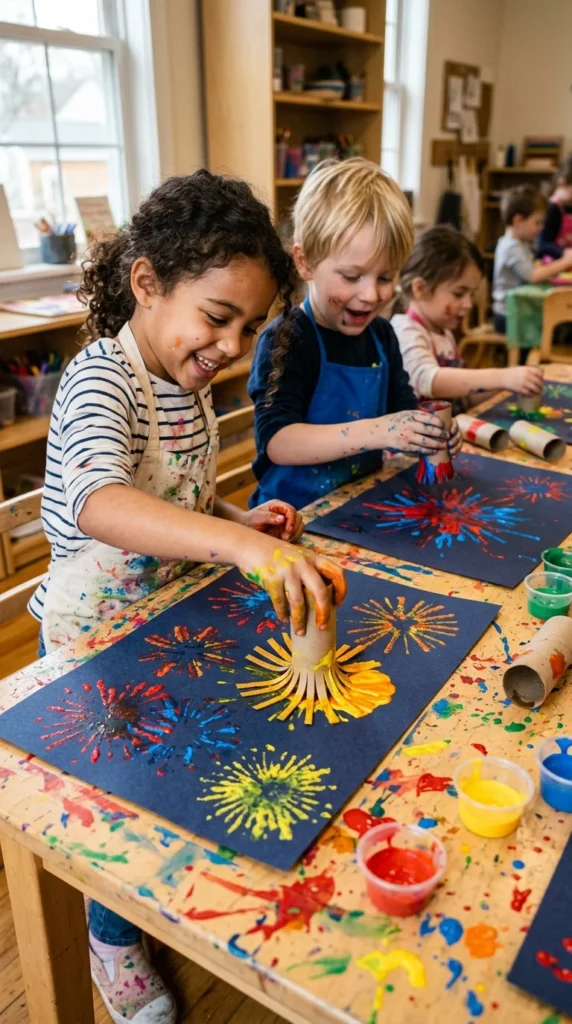
Cardboard tubes from paper towels or tissue rolls make great painting tools for kids. Cut small slits around one end and spread them outward to create a firework stamp shape.
Dip the tube into paint and press it onto dark paper. The prints resemble colorful fireworks exploding across the sky. Kids can layer several colors for brighter designs and fuller patterns.
Black or navy paper helps the paint stand out clearly. Metallic paint also creates fun shimmering effects during the activity. Children enjoy repeating the stamping motion because it produces fast and dramatic results.
This craft works well around celebration themes or nighttime art projects. Parents can add glitter glue later if kids want extra sparkle without needing expensive supplies.
Using recycled cardboard keeps costs low while giving household items a second purpose. The project stays easy to organize, and children often return to it because the stamping process feels playful and satisfying every time.
11. Nature Leaf Printing
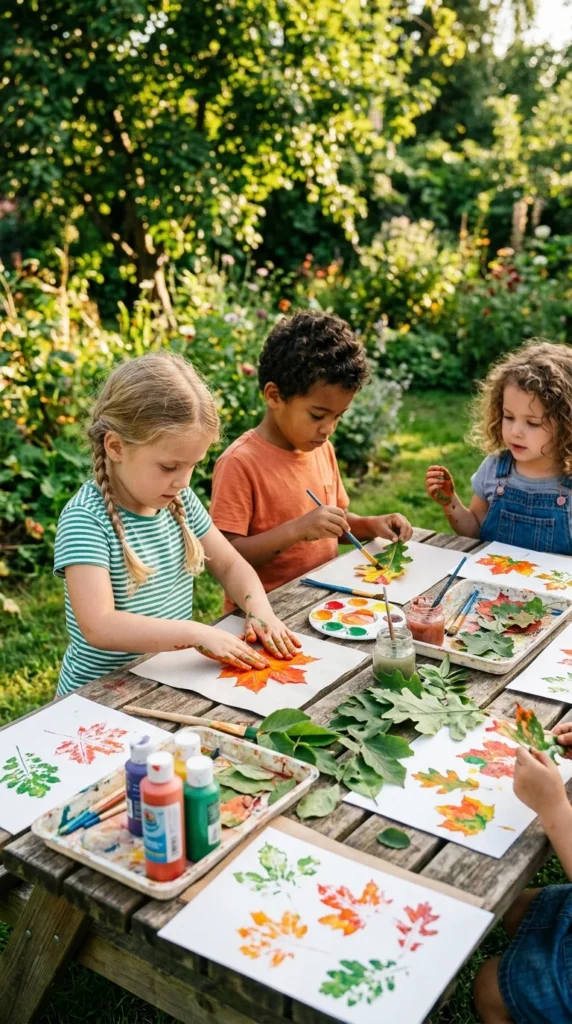
Leaf printing turns outdoor discoveries into colorful artwork kids can create with very little setup. Gather leaves of different sizes and shapes during a short walk outside. Wash and dry them before painting.
Children brush paint onto one side of the leaf and press it onto paper. When lifted, the leaf veins leave interesting patterns and textures behind. Kids often enjoy comparing different shapes and experimenting with layered colors.
This activity connects art with nature in a simple way. Some children create repeating patterns while others arrange leaves into trees, flowers, or forest scenes.
Tempera paint works nicely because it spreads evenly across leaf surfaces. Older paintbrushes are useful here since rough leaf textures can wear brushes down faster.
Parents can encourage kids to identify leaves during the activity for extra learning. The project feels calm and creative while giving children a chance to slow down and notice outdoor details around them.
12. DIY Watercolor Salt Art
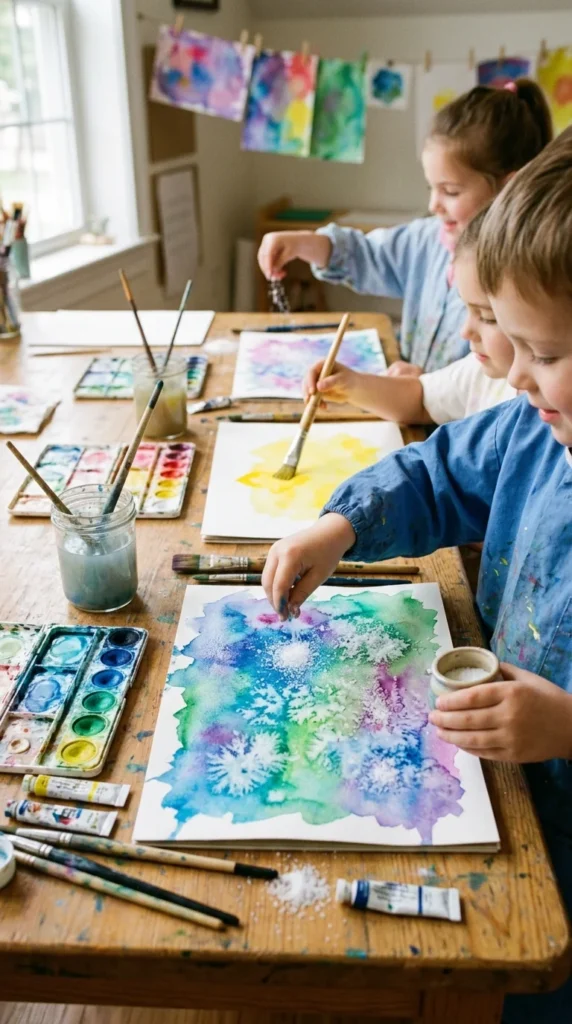
Salt art creates textured watercolor effects that surprise kids every time. Start by painting colorful watercolor patches onto thick paper. Before the paint dries, sprinkle table salt over the wet areas.
As the paper dries, the salt absorbs some color and leaves crystal-like patterns behind. Kids enjoy watching the changing textures appear slowly across the page. Every painting turns out unique.
This project stays affordable because it uses basic kitchen salt and inexpensive watercolor paints. Thick paper works best since thin paper may wrinkle from the moisture.
Children can create sunsets, oceans, galaxies, or abstract patterns using this technique. Soft color blending adds a dreamy effect that feels playful and artistic without requiring difficult skills.
After drying, gently brush away the salt to reveal the finished texture. Parents often enjoy this activity too because the results look detailed even when the process stays simple for younger children.
13. Balloon Paint Stamping
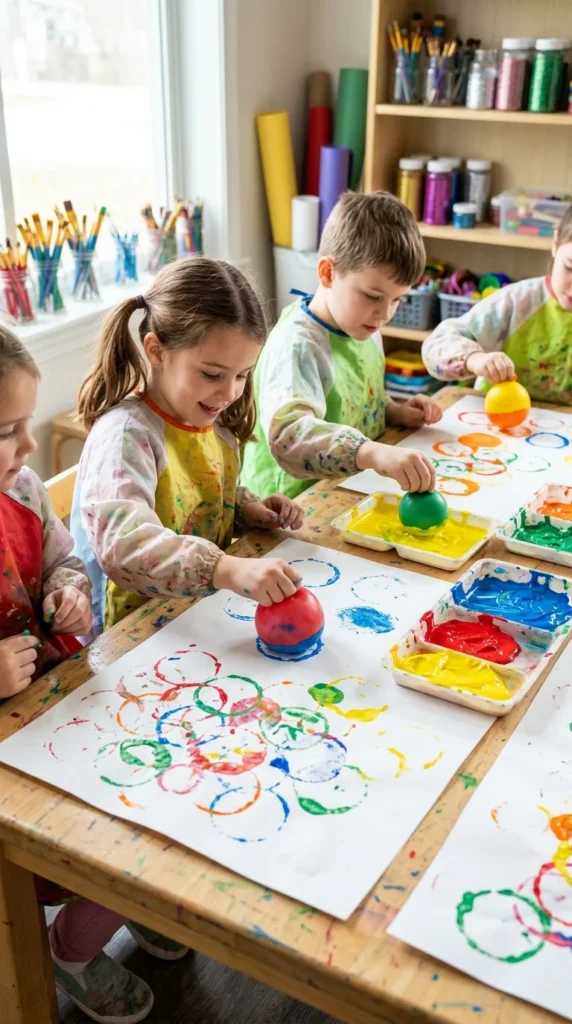
Balloon stamping creates bold circles and playful textures children love. Inflate small balloons just enough to fit comfortably in little hands. Dip the bottoms lightly into paint and stamp them onto paper.
Kids can create flowers, bubbles, caterpillars, or abstract patterns using repeated balloon prints. Mixing colors keeps the artwork lively and exciting without requiring detailed painting skills.
Washable paint helps simplify cleanup after the activity. Large craft paper gives children more space to experiment freely with shapes and overlapping colors.
This project works especially well for younger children because balloons are easy to grip and press. Parents can also draw outlines beforehand if kids want guidance while creating animals or scenery.
Balloon stamping feels energetic and playful from start to finish. Children enjoy the bouncy movement and the surprising textures left behind on the paper. The supplies stay inexpensive, making this a practical craft for classrooms, parties, or weekend fun at home.
14. Q-Tip Dot Painting
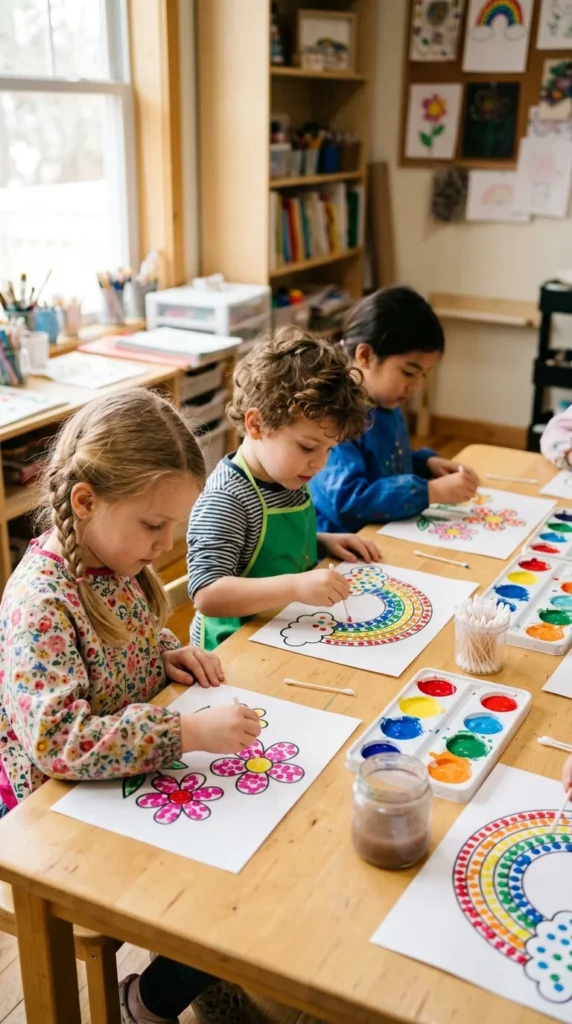
Q-tip painting gives kids a simple way to practice patience and control while creating colorful dot designs. Cotton swabs work like tiny paintbrushes, making them perfect for patterns, outlines, and dotted pictures.
Children can make rainbows, flowers, animals, or fireworks using rows of colorful dots. This activity works well for kids who enjoy slower, detailed crafting sessions.
Small paint trays help keep colors organized. Thick paper prevents paint from soaking through during repeated dotting. Parents can sketch light outlines beforehand if children want guidance for their artwork.
The project stays inexpensive because cotton swabs and washable paint are easy to find in most homes. Cleanup also stays manageable since kids use only small amounts of paint at a time.
Q-tip painting encourages concentration in a relaxed and creative way. Children enjoy watching tiny dots slowly form larger pictures across the page. Finished designs often look bright and textured, even with very simple supplies and techniques.
15. Fork Painted Flowers
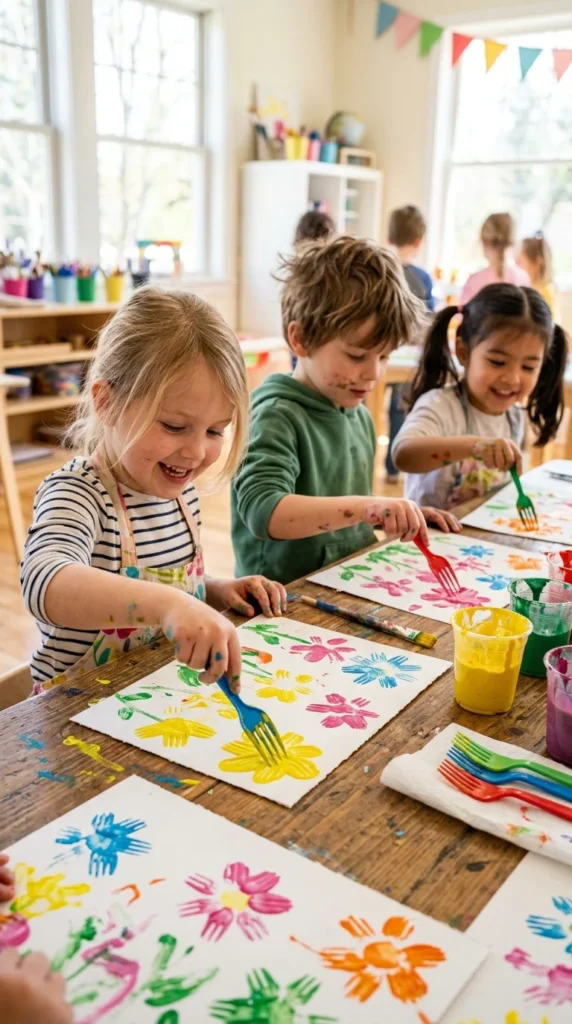
Plastic forks create fun flower textures that kids can stamp easily onto paper. Dip the back of a fork lightly into paint and press it outward several times to form petals around a center circle.
Children can create entire gardens using different colors and flower sizes. Green paint fingerprints or brush strokes work nicely for stems and leaves.
This craft uses simple household items instead of expensive art tools. Disposable forks also make cleanup quicker after painting sessions with younger children.
Bright spring colors like yellow, pink, orange, and purple help the flowers stand out clearly on white paper. Kids may also enjoy adding butterflies or sunshine around their painted gardens.
The stamping process feels playful and easy, making this activity a good choice for beginners. Finished artwork looks cheerful enough for seasonal decorations, homemade cards, or classroom displays without requiring complicated instructions.
16. Window Cling Paint Art
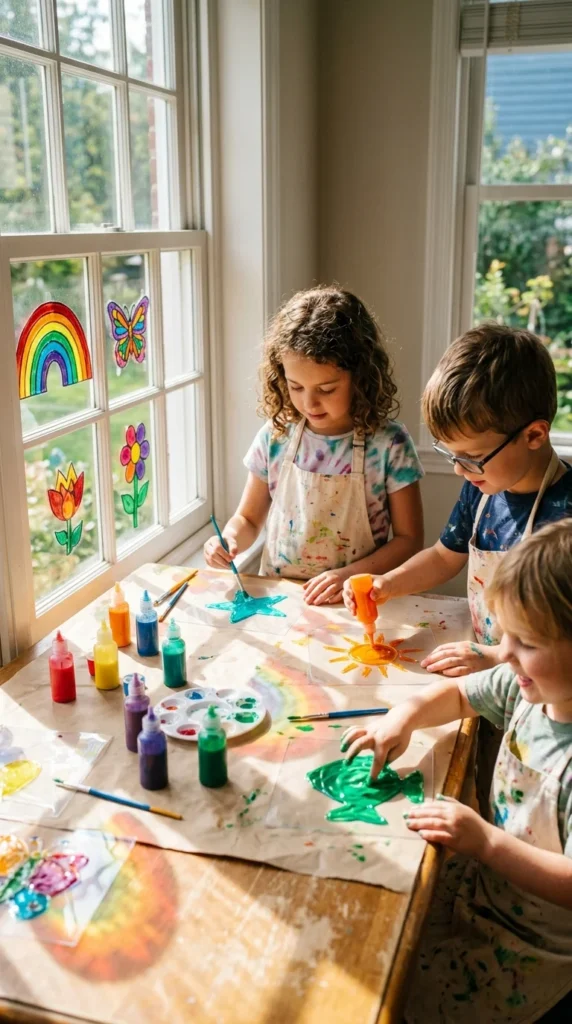
Window cling painting gives kids a chance to create colorful decorations that catch sunlight beautifully. Use clear plastic sheets or zip bags as the painting surface. Puffy paint or thick washable paint works best for this project.
Children can paint simple shapes like stars, hearts, flowers, or animals. Once dry, the artwork peels away carefully and sticks lightly to windows.
This activity feels exciting because kids get to display their creations around the home. Sunlight shining through the paint creates bright glowing colors during the day.
Parents can trace simple shapes onto paper underneath the plastic to help younger children follow easy outlines. Older kids may prefer designing their own pictures freely.
The supplies stay affordable, especially when reusing household plastic materials. Window cling art combines painting with decoration, giving children something fun to admire long after the craft session ends.
17. Marble Roll Painting
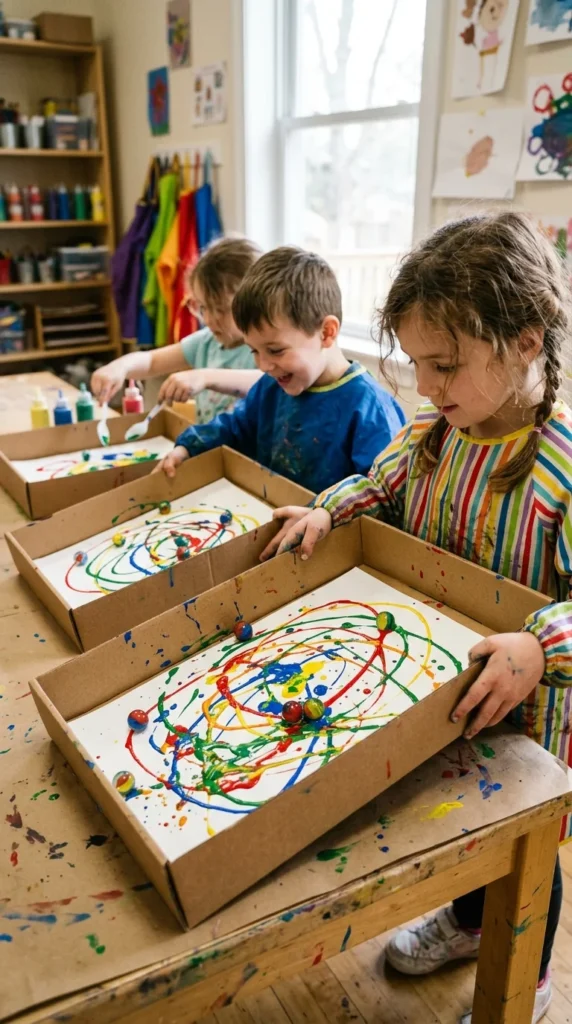
Marble painting creates energetic patterns that kids love watching form across the page. Place paper inside a shallow cardboard box or tray. Dip marbles into paint and drop them onto the paper.
Children tilt the box gently to roll the marbles around. The moving marbles leave colorful twisting trails behind them. Every design looks different depending on the movement and paint colors used.
This activity feels playful because kids control the artwork through motion instead of regular brush strokes. It also helps contain mess since the marbles stay inside the box while rolling.
Tempera paint works well because it coats the marbles evenly without dripping too heavily. Parents can reuse shoebox lids or food trays to keep costs low.
Kids often enjoy layering several colors to create busy abstract designs. The process stays simple enough for younger children while still entertaining older kids who enjoy experimenting with patterns and movement.
18. Tissue Paper Paint Collage
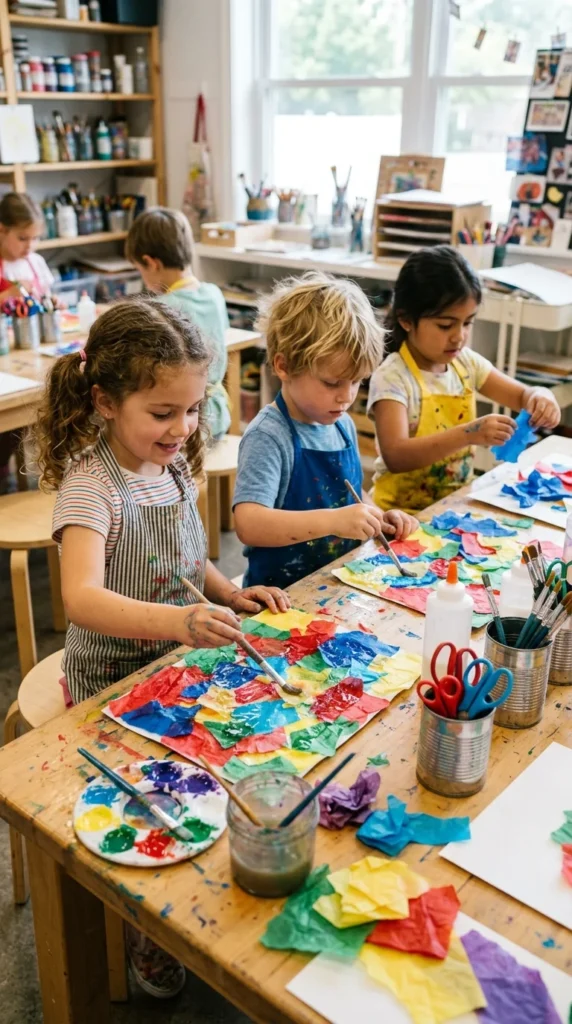
Tissue paper collage painting combines layering, texture, and color in one easy activity. Kids tear tissue paper into small pieces and glue them onto thick paper before brushing paint lightly across the surface.
The tissue paper creates soft blended colors underneath the paint. Children can build flowers, rainbows, animals, or abstract shapes using different layers and patterns.
This craft works well with leftover tissue paper from gift bags or party decorations. Using recycled materials keeps the project affordable while still feeling colorful and exciting.
Glue sticks help younger kids attach tissue paper without creating too much mess. Wide brushes spread paint smoothly over the finished collage.
Children enjoy mixing textures and colors freely during the activity. Some areas wrinkle slightly as they dry, adding extra character to the artwork. Finished pieces often look bright and layered even though the process stays simple and playful for all ages.
19. Painted Pasta Necklaces
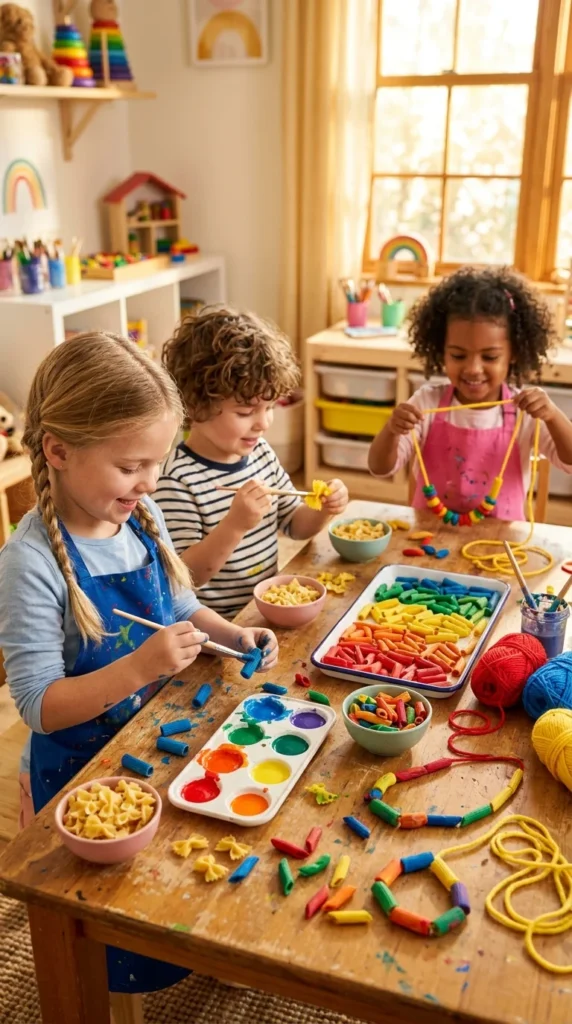
Painting pasta gives kids a creative activity that turns into wearable art afterward. Large pasta shapes like penne or rigatoni work best because they are easier for small hands to hold and string later.
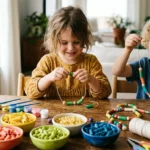
Children paint the pasta pieces in bright colors and leave them to dry on wax paper or trays. Once dry, they thread the pasta onto yarn or string to create necklaces and bracelets.
This craft combines painting with fine motor practice in a fun way. Kids enjoy choosing color combinations and arranging patterns while making their jewelry.
Washable paint and inexpensive pasta keep costs low for parents or teachers working with groups. Drying racks or paper towels help organize painted pieces before threading begins.
Children often feel proud wearing their handmade necklaces afterward. The project stays cheerful, affordable, and simple while giving kids something they can actually use and show off after crafting time ends.
21 Toy Car Wheel Painting
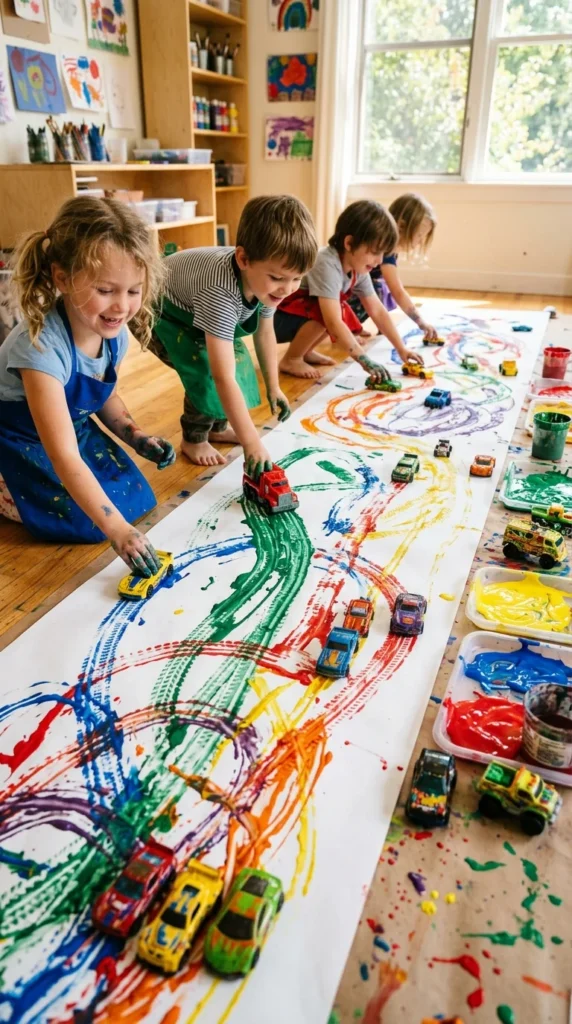
Toy car painting combines movement and creativity in a way many kids instantly enjoy. Dip toy car wheels lightly into washable paint and roll them across large paper sheets.
The wheels leave colorful tracks behind that look like racing paths and zigzag patterns. Children often enjoy testing different toy vehicles to compare wheel textures and paint lines.
Long rolls of paper work especially well because kids can create giant racetracks across tables or floors. Parents can tape paper down to keep it from sliding during active play.
This activity feels exciting because it mixes toys with painting. Kids who normally avoid crafts may become more interested when toy cars are involved.
Cleanup stays manageable when using washable paint and shallow trays. Older toy cars can be cleaned easily afterward with warm water and soap. The project stays energetic, colorful, and budget-friendly while giving children lots of freedom to experiment with movement and patterns.
Conclusion
Painting crafts give kids an easy way to stay creative while having fun with simple materials at home or in the classroom. From sponge stamps to marble rolling and finger painting, these activities encourage imagination without requiring expensive supplies or complicated instructions. Many of these ideas also reuse common household items, which keeps crafting affordable and practical. Kids can explore colors, textures, and playful designs while building confidence through hands-on art. Trying different painting projects throughout the week can turn ordinary afternoons into colorful memories filled with creativity and laughter.